
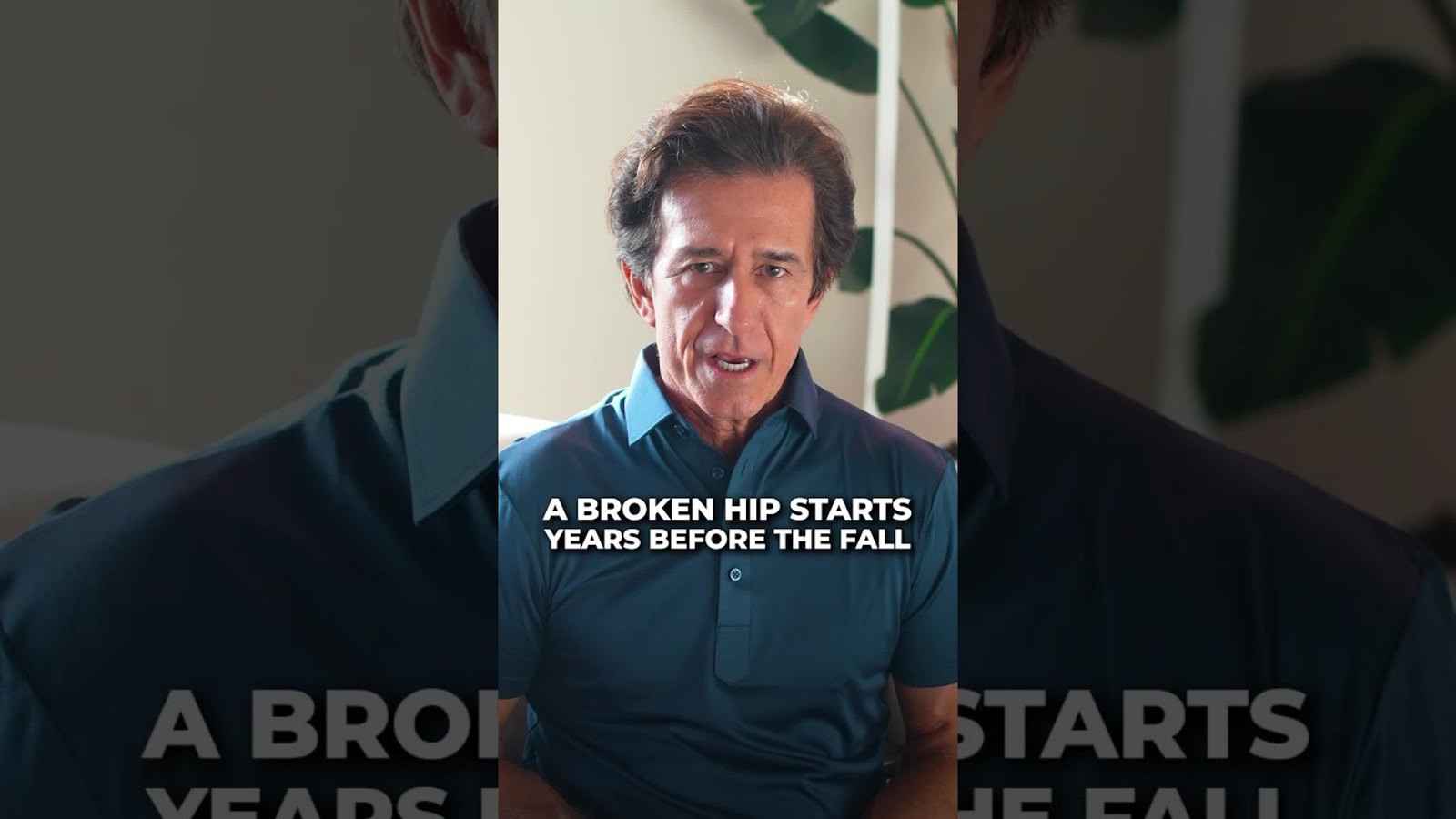
Balance exercises for seniors build steadier legs, hips, and core muscles, which can help lower your risk of a fall. This guide covers six moves, two quick self-checks, and when functional wellness care for weak core and hip muscles can help. I explain why weak muscles and slipping balance lead to hip fractures in my video on how to prevent a hip fracture.
Do balance exercises for seniors help prevent falls?
Yes. Regular balance and strength practice can help lower your risk of falling. A 2019 Cochrane review of 108 trials found exercise reduced the rate of falls in older adults by 23%. Build balance work into your week, not just walking.
I'm Dr. Ivan Bracic, DC, founder of Novaré Injury Care and Rehab in Fort Myers. I've cared for more than 30,000 patients across Illinois and Florida. My goal is improving your mobility and confidence while you feel respected, listened to, and in charge of your plan.
Per the CDC's facts on older adult falls, more than one out of four older people falls each year. Less than half tell their doctor. If you're reading this, your goals probably include staying independent and preventing a more serious issue down the road.
Why falls and hip fractures become more common with age
Staying upright takes leg strength, quick reactions, and clear vision working together. The National Institute on Aging lists muscle loss with age, called sarcopenia, and balance and gait problems as fall risk factors. Check your vision with your doctor, too, since it plays a part.
Falls are also how most hip fractures happen. Per the same CDC data, 88% of emergency visits and hospital stays for hip fractures were caused by falls. Each year, nearly 319,000 older people are hospitalized for hip fractures.
As I see it, a fall is rarely random. Often the muscles were already too weak to catch the person, and balance had been slipping for years. The upside is that strength and balance can improve with practice.
Is losing your balance a normal part of aging?
Not entirely. The CDC lists lower body weakness and difficulties with walking and balance as fall risk factors that can be changed. Treat a new wobble as a signal to train, not something to accept.
Many people respond to a wobble by doing less. The CDC notes that fear of falling can make people cut down on everyday activities, and being less active makes them weaker.
My advice goes beyond being more careful. Preventing a fall is about being strong enough that your body can protect itself. Start building that strength now, at whatever level you're at today.
Check your balance at home with two quick tests
The CDC's STEADI program uses simple checks like these to screen older adults for fall risk.
- Set up safely. Stand at a kitchen counter with a sturdy chair behind you and someone nearby. Wear stable shoes, and stop if you feel dizzy.
- Stand on one leg. Lift one foot, time how long you hold it, then switch. The CDC's 4-Stage Balance Test uses 10 seconds per position.
- Rise from a chair, arms crossed. Count full stands in 30 seconds. The CDC's 30-Second Chair Stand treats a below-average count as a fall risk sign.
6 balance exercises for seniors to practice at home
These are the six moves I recommend most. Do them next to a counter or sturdy chair, and start with the easiest version.
- Single-leg stand. Hold the counter, lift one foot, and balance for 10 seconds per leg. Use fewer fingers on the counter as you get steadier.
- Heel-to-toe walk. Walk along the counter, placing one heel directly in front of the other foot's toes. Take 10 to 20 slow steps.
- Sit-to-stand. Scoot to the front of a sturdy chair, lean forward, and stand without pushing off. Sit down slowly, 5 to 10 times.
- Bodyweight squats. Stand with your feet about hip-width apart, sit your hips back, and rise. Go only as deep as your knees allow.
- Side leg raises. Hold the counter and lift one leg out to the side, toes forward. Lower slowly, 10 times per side.
- March in place. Hold the counter and lift each knee in turn, as if climbing a step. March for 30 seconds, then rest.
Strong hips and glutes for steadier balance
Your hips do much of the steadying work when you stand on one leg or catch a stumble. The muscle on the side of your hip, the gluteus medius, keeps your pelvis level each time you step.
I recommend a simple single-leg stand to train it. Stand tall by a counter, lift one foot, and keep both hips level for up to 30 seconds per side.
Bodyweight squats for balance and hip strength
Squats strengthen your hips, glutes, hamstrings, and quads, the muscles that help you catch yourself and stand back up. Keep them light, two or three times a week, instead of heavy.
Stand with your feet about hip-width apart, keep your chest up, and sit your hips back. Go to about a 90-degree knee bend, or less if your knees bother you. Squeeze your glutes as you rise.
Start with what you can do, even 10, and build over weeks. My guide on how to slow down arthritis covers knee-friendly strength work.
Stand up from a chair without your hands to build balance
Getting up from a chair is a strength and balance skill you use every day. The National Institute on Aging lists practicing standing from a sitting position among its balance exercise examples.
Sit near the front of the seat with your feet under your knees. Stand using your legs, glutes, and abs instead of the armrests. Save the armrests for days when you're in pain.
Your core and pelvic floor in fall prevention
Your core is more than your abs. The muscles of your pelvic floor, hips, and glutes help keep you stable when you stand, turn, and reach.
Exercise comes first. If weak core and hip muscles need more help, we offer EMSCULPT NEO functional wellness for muscle re-education after a screening exam. Results vary, and it doesn't replace balance practice.
How often to practice balance and where tai chi fits
Practice in short sessions on most days. The National Institute on Aging suggests about three sessions of balance exercises a week. Build them around strength work and walking.
Tai chi is another good option. The 2019 Cochrane review found tai chi may reduce the rate of falls by 19%. Balance and functional exercises reduced it by 24%.
Stretching helps you move freely, but that review found no trials testing stretching-only programs, so their effect on falls is unknown. My guide to stretching exercises for seniors covers daily mobility moves to pair with this routine.
Safety tips for balance exercises at home
These are the safety steps I recommend for practicing at home:
-
Keep a sturdy chair, counter, wall, or another person within reach.
-
Wear stable shoes with good grip, or go barefoot on a non-slip floor.
-
Stand up slowly before you begin, since blood pressure can drop when you rise.
-
Move slowly, and stop if you feel dizzy, short of breath, or in pain.
-
Ask your doctor first if you've fallen recently or take medicines that make you drowsy.
What a balance evaluation at our clinic includes
Our first visit typically runs 1 to 1.5 hours, and most of that time is with me. Our board-certified MD medical director is part of the team when your case needs medical input. Make a list of your medicines and any recent falls before you come.
- Your history and goals. Any falls or near-misses, your health history, and what you want to keep doing.
- A hands-on exam. I check your strength, balance, and how you walk, sit, and stand.
- Imaging when needed. Digital X-rays on site, and an MRI review when your exam calls for one.
- A clear plan. A findings report, your X-ray images on a flash drive, and next steps like rehab exercises for home.
What patients say about evaluations at our clinic
My experience at the office was well worth the visit. The Dr. Was informative, experienced, but most importantly, leveled with me. I didn't feel like he followed a script which made him appear more personable in my experience. I scheduled with the office twice then cancelled cause I didn't think I'd be impressed as far as my personal expectations but eventually proved wrong. Would I recommend this office? Yes! This office has a great team that's on point and the Dr. Is able to deduce the issues you may be facing or have faced and help you shift in the direction you'll need in order start or continue improving your mobility and the quality in your every day enjoyments.
James A., Lehigh Acres, Google review
Individual results vary.
Signs after a fall that need prompt medical care
Most stumbles aren't emergencies, but get medical care right away if any of these happen with a fall:
-
You hit your head, especially if you take a blood thinner.
-
You can't put weight on a leg, or your hip or groin hurts badly.
-
One leg looks shorter or turned outward after the fall.
-
You feel confused, faint, or newly weak or numb.
-
Dizziness or a blackout came right before the fall.
Get a balance and fall prevention plan in Fort Myers
If your balance feels less sure than it used to, I'd like to examine you and find out why. We see patients in Fort Myers and Lehigh Acres, in English and Spanish.
See functional wellness care for core and hip strength
The questions I hear most about balance and falls, answered plainly.
Dr. Ivan Bracic, DC, is the founder and clinical director of Novaré Injury Care and Rehab in Fort Myers and Lehigh Acres, Florida. He has cared for more than 30,000 patients across Illinois and Florida since 1994 and is Trauma Team certified.
He speaks to older adults in Southwest Florida about aging well, including a 2025 Fort Myers talk on longevity, balance, and independence.
- Daily moves to stay limber: stretching exercises for seniors.
- Keep your knees and spine moving: how to slow down arthritis.
- What to expect step by step: your first chiropractic appointment.
Frequently Asked Questions
Can balance be improved in older adults?
Often it can, though results vary and I won't promise a timeline. The Cochrane review found balance and functional exercises reduced the rate of falls by 24% in older adults. Practice a few minutes most days and retest your single-leg stand each month.
How long should a 70-year-old be able to balance on one foot?
There's no single number I'd hold you to at any age. The CDC's 4-Stage Balance Test asks older adults to hold each position, including standing on one foot, for 10 seconds. Aim for 10 seconds per leg first, then build up slowly.
What exercises will help keep my balance as I age?
A mix works better than any single move: balance practice, leg and hip strength, and regular walking. The National Institute on Aging recommends combining aerobic, muscle-strengthening, and balance activities each week. Ask your doctor to check your vision and medicines too.
Should I tell my doctor about a fall if I wasn't hurt?
Yes. Per the CDC, falling once doubles your chances of falling again, yet less than half of older adults tell their doctor. Mention every fall or near-miss at your next visit, even a small one.
What if home exercises weren't helping me stay steady?
Then it's time for an exam. The CDC lists medicines, vision problems, and foot pain among fall risk factors that exercise alone won't fix. Ask for an evaluation that checks your strength, how you walk, and imaging when needed.
Is it safe to see a chiropractor about balance if I'm nervous about going?
For most people, yes, when care starts with a proper exam. In one Fort Myers review, a patient says they were nervous about going to a chiropractor at first. Read what happens at <a href="/novare-first-chiropractic-appointment/">your first chiropractic appointment</a>, and ask every question before any treatment starts.
This article is educational and is not medical advice. Balance problems and falls have many causes, and some need prompt medical attention. If you have fallen, feel dizzy, or notice your balance getting worse, get evaluated by a qualified provider to find the right care for your situation.