
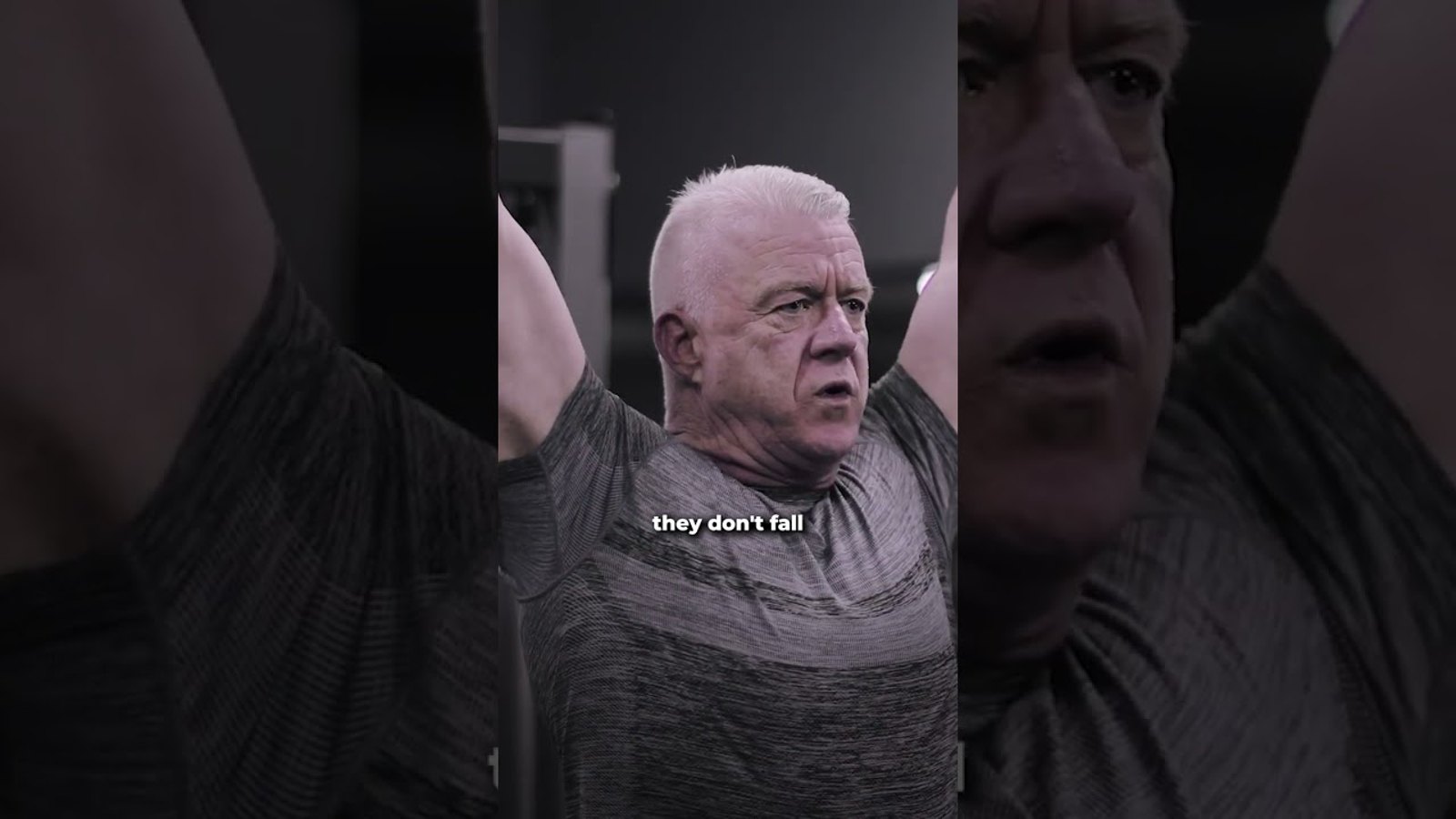
Strength training for seniors means two or more short sessions a week that build and keep the muscle you use every day. This guide covers sarcopenia, four simple exercises at home, recovery after 60, and EMSCULPT NEO functional wellness for weak muscles.
Can you still build muscle after 60?
Yes. The National Institute on Aging (NIA) says it's possible for many older adults to increase muscle strength with exercise. Start with the muscles you use to stand up, climb stairs, and carry groceries.
I'm Dr. Ivan Bracic, DC, founder of Novaré Injury Care and Rehab in Fort Myers, and I've cared for more than 30,000 patients across Illinois and Florida. With older adults, my goal is to help you continue improving your mobility and the quality of your everyday life.
Strength fades quietly. Per NIA, about 30% of adults over 70 have trouble walking, getting up from a chair, or climbing stairs. If those tasks feel harder than they used to, that's your cue to start.
What sarcopenia is and why muscle loss speeds up with age
Sarcopenia is the age-related loss of muscle mass, strength, and function. A 2004 review on PubMed Central estimates muscle mass drops about 3% to 8% per decade after 30, faster after 60. Start building strength now, whatever your age.
NIA notes that muscle strength peaks around age 30 to 35, then declines faster after about 65 for women and 70 for men. Poor nutrition and lack of exercise raise the odds of sarcopenia, and both are things you can change.
It happens gradually, so most people notice it as avoidance: taking the elevator, asking for help with heavy bags. What helps is regular strength work plus exercises and eating habits that will help keep your body flexible and mobile.
Why muscle is the key to aging well
Strong muscles help keep you capable as you age. According to NIA, age-related loss of muscle mass and strength is a big culprit when older adults lose physical abilities. Treat strength as the center of your plan for aging well, never an extra.
In my experience, the patients in their 60s, 70s, and 80s who age well keep their muscles strong. Muscle does the everyday work: getting out of a low chair, lifting a suitcase, climbing the steps to a beach walkway.
Muscle still responds to training later in life. I teach this in community talks like The Art of Aging Well and Longevity Starts with Strength. Give your muscles a reason to grow, then keep giving it one.
Strength training for seniors starts with 2 days a week
The CDC's activity guidelines for older adults set a simple weekly target for adults 65 and older, and these are the pieces I recommend building around:
-
At least 2 days a week of strength work for your legs, hips, back, abdomen, chest, shoulders, and arms.
-
At least 150 minutes a week of moderate activity, such as a brisk 30-minute walk five days a week.
-
Balance practice, like walking heel to toe. My guide to balance exercises for seniors has moves to start with.
-
Gentle mobility most days. My stretching exercises for seniors cover simple daily moves.
-
A rest day between strength sessions so your muscles can recover.
How to build muscle after 60 with shorter sessions and real recovery
Train with precision instead of more volume. According to CDC guidelines, 2 strength days a week is the floor, so daily workouts aren't required. Plan two or three sessions, each followed by a rest day.
After 60, I recommend shorter sessions built on compound movements that work several joints at once. Think of a squat to a chair, a pushup against a counter, or a carry.
Recovery is part of the program. Sleep, rest days, and enough protein at meals give your muscles what they need to rebuild. If you take a GLP-1 medication for weight loss, ask your prescriber about protecting muscle, a topic I cover in a separate article.
4 simple moves to start strength training for seniors at home
These four exercises need no equipment and train your hips, shoulders, core, and back. Start with the version you can do well and build from there.
- Plank. Hold a straight line from head to heels, from your knees or against a counter at first. Progress by holding longer, then adding slow movement.
- Side plank. Prop on one forearm and lift your hips, knees bent to start. Progress to straight legs, then add small, controlled hip dips.
- Bridge. Lie on your back with knees bent and lift your hips. Progress by lifting higher, holding longer, then lifting one leg off the floor.
- Bird dog. On hands and knees, reach one arm forward and the opposite leg back. Progress by drawing elbow to knee as you exhale.
Bird dog levels that build core strength with control
The bird dog trains your core and back while you hold steady on hands and knees. My short bird dog video labels three levels: beginner work for core stability, intermediate work for back control and balance, and an advanced level.
The test at every level is control. Keep your back flat and your hips level, as if a cup of water sat on your lower back. If your hips rock or your back sags, drop back a level.
Move up only when the current level feels steady for several slow reps on each side.
The farmer carry for practical strength after 60
The farmer carry is one of my favorite examples of practical strength. You pick up two equal weights, stand tall, and walk. It works your shoulders, core, hips, and knees in one move.
Start light, with two grocery bags or two water jugs, and walk a short distance on a flat floor. To challenge a weaker side, mix it up with one weight heavier than the other. Stop the set if your shoulders creep up or your back rounds.
Done regularly, carries build the strength you use to bring in groceries or haul a beach chair.
Strength training for women through menopause
Your body changes through menopause, and the answer is to keep the whole body moving. I recommend four pieces: strength, mobility, cardio, and nutrition that supports your metabolic health. Build and maintain each one, week after week.
Low-impact moves count. A simple exercise you enjoy and will repeat does more for you than a hard one you skip.
Bring up menopause symptoms, bone health, and medications with your own doctor. Your strength plan should fit around that care.
Signs to stop strength training and get checked
Some soreness a day or two after a new exercise is common. Stop and get medical care before you train again if you notice any of these:
-
Chest pain, pressure, or unusual shortness of breath during exercise.
-
Dizziness, fainting, or a racing or irregular heartbeat.
-
A joint that swells, locks, or gives way.
-
Sharp pain, or pain that gets worse each session or wakes you at night.
-
New numbness, tingling, or weakness in an arm or leg.
When muscles are too weak to train and how our clinic helps
Some people can't yet work hard enough to wake up weak muscles, often after an injury, surgery, or a long stretch of inactivity. That's when supervised rehabilitative exercise and therapy helps. Ask for an exam if training on your own has stalled.
At our clinic, EMSCULPT NEO functional wellness is an FDA-cleared adjunctive therapy for muscle re-education, and sarcopenia is among the conditions it's used for. It supports exercise and never replaces it. We pair it with rehab exercise as part of your plan.
Results vary from person to person, and no therapy reverses aging. The goal is enough strength to get you back to your own routine at home.
What a strength evaluation at our clinic includes
Our first visit typically runs 1 to 1.5 hours, and most of that time is with me. Expect four parts.
- Your history and goals. What feels harder now, what you've tried, and what you want to keep doing.
- A hands-on exam. I check strength, range of motion, balance, and how you walk, sit, and stand.
- Imaging when needed. Digital X-rays on site, and an MRI review when your exam calls for one.
- A clear plan. You leave with a report of the findings, your X-ray images on a flash drive, and next steps.
What patients say about our strength and rehab care
just moving to the area both my wife and I have visited Dr. Ivan and I've been thoroughly impressed with how thorough he is with the process of evaluating our needs. Being a chiropractic patient for the last 15 years, he was the most extensive explanation of our situation and offered a series of remedies ranging from self-help to plans of improvement. All his staff genuinely care about their patients and we're very friendly. This was one of the most complete visits I've had in my history of chiropractic care. I would highly recommend using Dr. Ivan for your chiropractic needs.
Dan A., Lehigh Acres, Google review
Individual results vary.
Get a strength plan for aging well in Fort Myers
If you want a safe place to start strength training, I'd like to examine you and build a plan that fits. We see patients in Fort Myers and Lehigh Acres, in English and Spanish.
See EMSCULPT NEO functional wellness and muscle rehab
The questions I hear most about strength training after 60, answered plainly.
Dr. Ivan Bracic, DC, is the founder and clinical director of Novaré Injury Care and Rehab in Fort Myers and Lehigh Acres, Florida. He has cared for more than 30,000 patients across Illinois and Florida since 1994 and speaks to senior communities about aging well.
- Steadier on your feet: balance exercises for seniors.
- Simple daily mobility: stretching exercises for seniors.
- Keep joints moving: how to slow down arthritis.
Frequently Asked Questions
Should a 70 year old do strength training?
For most people, yes, after a check with their doctor. NIA says many older adults can increase muscle strength with exercise. Start with bodyweight moves you can do with good form, then add resistance slowly.
How many days a week should seniors do strength training?
At least two. The CDC recommends muscle-strengthening activity at least 2 days a week for adults 65 and older, working all major muscle groups. Leave a rest day between sessions so your muscles can recover.
Is it too late to start if I've never lifted weights?
No. The CDC's activity guidelines include muscle-strengthening work for all adults 65 and older. Begin with the four simple moves above and add a little each week.
Is it safe to see a chiropractor for muscle weakness if I'm nervous about going?
For most people, yes, when care starts with a proper exam. In one Fort Myers review, a patient says they were nervous about going to a chiropractor at first. Read what happens at <a href="/novare-first-chiropractic-appointment/">your first chiropractic appointment</a>, and ask every question before treatment starts.
What exercises and eating habits help seniors keep muscle?
Strength work twice a week, regular walking, and eating habits that put protein on your plate at meals. The CDC pairs muscle strengthening with 150 minutes of moderate activity each week. Ask your doctor how much protein fits your health.
Does walking count as strength training?
Not on its own. The CDC lists aerobic activity like brisk walking separately from muscle-strengthening activity, and older adults need both. Keep your walks and add two strength days.
Can you reverse muscle loss from aging?
You can't stop aging, but you can often rebuild strength. NIA says there's no way to fully stop the clock, yet exercise can increase muscle strength for many older adults. Focus on steady training, and be wary of anyone promising to reverse aging.
How long does it take to get stronger after 60?
It varies, and I won't promise a timeline. NIA researchers track progress with simple tests like balance, walking speed, and standing up from a chair five times. Time how easily you rise from a chair, and judge the trend over several weeks.
This article is educational and is not medical advice. Muscle loss, weakness, and fatigue have many causes, and some need prompt medical attention. Talk with your doctor before you start a new exercise program, especially if you have heart, lung, joint, or balance problems, and get evaluated if weakness is new or getting worse.