
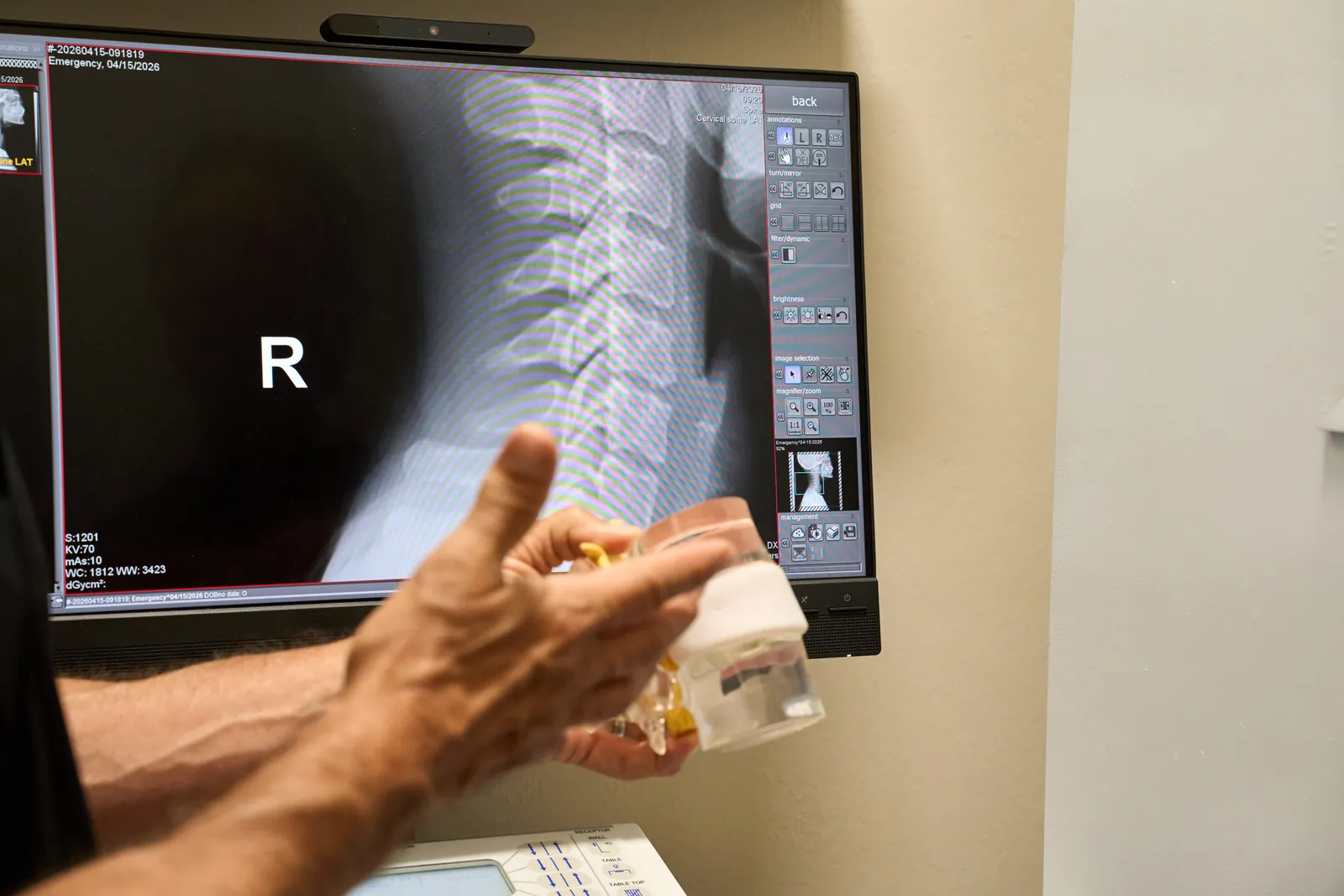
After a car accident, the first days matter more than most people realize: stay safe and document the scene, get medically evaluated even if nothing hurts yet, and watch for symptoms that surface over the next few days. Feeling fine at the scene does not mean you were not hurt. If you were in a crash in Southwest Florida, our team provides same-day auto accident care in Fort Myers and Lehigh Acres and documents the connection between your symptoms and the accident.
I'm Dr. Ivan Bracic, and I've spent more than 30 years treating injury patients, many of them here in Fort Myers and Lehigh Acres. What I tell every new crash patient is that the first few days set up everything that follows, both for how they heal and for whether their care is covered. Here is what to do, in order, starting at the scene.
The first hours after a car accident
In the first hours, your job is safety and documentation. Move to a safe spot if you can, check everyone for injuries, and call 911 so there is an official crash report on file. Even a minor collision is worth a report, because it is the record everything else is built on.
If it is safe to do so, photograph the vehicles, the damage, the road, and anything relevant, and exchange names, insurance details, and contact information with the other driver. Write down how the crash happened while it is fresh. These details feel obvious in the moment and disappear within a day, and they are exactly what a doctor and an insurer will ask for later.
Why to get evaluated even when you feel fine
The most common mistake after a crash is skipping the evaluation because nothing hurts yet. Adrenaline and cortisol surge during a collision and blunt pain for hours or even a day. As those stress hormones fade, the inflammation from strained muscles, ligaments, and discs builds and peaks, usually between 24 and 72 hours later. That is when the pain you did not feel at the scene finally arrives.
Getting evaluated early does two things. It catches injuries like whiplash and disc irritation before they settle in, and it creates a medical record that connects your symptoms to the accident from day one. In Florida, that timing is not optional: PIP medical benefits generally require that you be seen within 14 days of the crash.
Delayed injury symptoms to watch for
Over the first several days, watch for neck stiffness, headaches, back or shoulder pain, tingling or numbness in the arms or legs, dizziness, and trouble sleeping or concentrating. These are the late-arriving signs of soft-tissue and spinal injury, and they are easy to dismiss as soreness or stress.
Treat any of them as a reason to be seen, not a reason to wait. A short list of red flags calls for emergency care right away rather than a routine visit: a severe or worsening headache, weakness in an arm or leg, confusion, or any loss of bladder or bowel control. Short of those, the pattern of stiffness and aching that grows over a few days is the ordinary course of a crash injury and should be evaluated promptly.
Documenting your injuries for insurance and a claim
From your first visit onward, documentation is what protects you. Tell the provider that your symptoms started after a car accident, and bring your crash report and insurance information so the connection is recorded in your chart. That link between the collision and your injuries, written down early, is what supports a PIP or injury claim later.
Keep your own file too: the crash report, photos, the names of everyone you spoke with, your symptoms and when they started, and every appointment. If an attorney becomes involved, this record saves weeks and prevents the gaps that insurers use to dispute a claim.
How a car accident chiropractor fits into recovery
A car accident chiropractor is built for exactly this window. The visit starts with an evaluation of the crash injury and imaging when it is warranted, then a conservative, non-surgical plan for the soft-tissue and spinal problems that collisions cause. Care is coordinated and documented, so the treatment and the paper trail move together.
At our clinic the process is designed around the crash patient: same-day accident care, in-house imaging, and chiropractic care matched to what the evaluation finds, all tied to one continuous record. The goal is a real recovery and a clean account of it, so the first days after your accident work for you rather than against you.
Frequently Asked Questions
What should I do first after a car accident?
Get to safety, check everyone for injuries, and call 911 so there is an official crash report. Then, if you can do it safely, photograph the vehicles, the scene, and any visible damage, and exchange names, insurance, and contact details with the other driver. The report and your photos become the backbone of both your medical record and your insurance claim, so gather them before you leave the scene.
Should I see a doctor after a car accident even if I feel fine?
Yes. Adrenaline can hide pain for a day or more, and soft-tissue and disc injuries like whiplash often surface slowly over the next 24 to 72 hours. A prompt evaluation catches hidden injuries early and creates a medical record linking your symptoms to the crash. In Florida, PIP medical benefits generally depend on being seen within 14 days of the accident, so getting checked early protects your health and your coverage.
What are delayed injury symptoms to watch for after a crash?
Watch for neck stiffness, headaches, back or shoulder pain, tingling or numbness in the arms or legs, dizziness, and trouble sleeping or concentrating. These can appear a day or several days after the crash as inflammation builds. Any of them warrants an evaluation. Severe headache, weakness, or loss of bladder or bowel control are red-flag symptoms that call for emergency care right away.
How does a car accident chiropractor help after a crash?
A car accident chiropractor evaluates the crash injury, orders imaging when it is needed, and builds a documented treatment plan for the soft-tissue and spinal problems that follow collisions. The care is conservative and non-surgical, and the visit also creates the medical record that connects your symptoms to the accident, which matters for both recovery and a PIP or injury claim.
How long do I have to get treated after a car accident in Florida?
Florida generally gives you 14 days from the date of the crash to be seen for PIP medical benefits. Miss that window and you can lose access to those benefits even if your injuries are real. Because symptoms often show up late, the safest move is to be evaluated within the first few days rather than waiting to see whether the pain gets worse.
This article is educational and is not medical or legal advice. If you were in a crash, get evaluated by a qualified provider promptly, and speak with a licensed attorney about your specific coverage and rights.