
I'm Dr. Ivan Bracic, DC, founder and clinical director of Novaré Injury Care and Rehab in Fort Myers and Lehigh Acres. Feeling stiff and achy after a car accident is common, and a lot of it is ordinary soreness from being jolted hard. Stiffness can also be the first sign of a sprain, a strain, or a nerve problem that needs an exam.
Below is how to tell the difference, which symptoms need emergency care, and why timing matters under Florida law.
A crash sends force through your whole body in a fraction of a second. Your muscles brace, your seat belt holds you, and your joints move farther and faster than they're built to. That's why the aches often show up in more than one place, and why they can show up late.
It's the same pattern behind delayed injuries after a car accident, applied to the stiffness you feel right now.
Is it normal to feel stiff after a car accident?
Yes, stiffness and aching are common after a crash, and they don't always start right away. Cleveland Clinic notes that some whiplash symptoms take at least 12 hours to appear, and sometimes a few days. Treat a slow start as typical for crash injuries, not as proof that nothing is wrong.
Common doesn't mean harmless, though. Ordinary soreness and a real injury can feel almost the same on the first day. What separates them is how the stiffness behaves over the following days, and whether other symptoms come along with it.
Where does stiffness show up after a crash?
Stiffness after a crash can show up anywhere the force traveled. The neck, upper back, low back, shoulders, and hips are all common spots. Check each area slowly by turning, bending, and reaching, and notice where movement feels limited.
The neck gets the most attention because a whiplash motion can strain the muscles and ligaments that hold it steady. If turning your head is the main problem, our neck stiffness evaluation explains what that exam looks at. For crash-related neck pain, see how we approach whiplash treatment.
Your low back and hips take force too, especially in a rear or side impact. Soreness can also settle where the seat belt held you across the chest and hips. Stiffness between the shoulder blades can travel along with a neck strain.
How can you tell ordinary soreness from an injury?
Ordinary soreness tends to feel like a dull, general ache that loosens as you move around. Pain that is sharp, sits in one spot, spreads, or keeps getting worse points more toward an injury. AAOS, the national association of orthopedic surgeons, lists stiffness, reduced motion, and pain peaking a day or so later for neck sprains.
Use those signs as a reason to get examined, not as a way to diagnose yourself. These are the patterns worth an appointment:
- Stiffness that keeps you from turning your head, bending, or lifting your arms
- Pain that is sharp or sits in one specific spot
- Pain that spreads into the back of your head
- Mild tingling that comes and goes, without numbness or weakness
- Aches that are getting worse instead of easing
- Trouble sleeping or getting comfortable because of pain
What can you do for stiffness before your exam?
Gentle movement within your comfort range and cold packs can help with comfort in the first days. AAOS suggests icing a neck sprain for 15 to 30 minutes, several times a day, for the first 2 or 3 days. Avoid heavy lifting, hard workouts, or forcing a stiff joint through pain until you've been examined.
Write down what hurts, when it started, and what makes it better or worse. Keep photos of any bruising from the seat belt too. Self-care is for comfort, and it doesn't replace an exam.
Which symptoms after a crash need emergency care?
Some symptoms can't wait for a regular appointment. Call 911 or go to the nearest emergency room for numbness, weakness, a severe headache, or loss of bladder or bowel control, and for confusion, trouble speaking, or repeated vomiting. AAOS advises immediate medical attention when neck pain shoots down the arms or legs, or comes with a headache and numbness, tingling, or weakness in the arms or legs.
These red flags can point to pressure on the spinal cord or nerves, a head injury, or another serious problem. A chiropractic office is not the right first stop for any of them. Get emergency care first, then follow up for the muscle and joint side once you're cleared.
Why does the 14-day rule matter in Florida?
Florida's PIP law ties medical benefits to getting initial care within 14 days after the accident. That law is Section 627.736 of the Florida Statutes, which also sets a $10,000 PIP limit for medical and disability benefits. Schedule an evaluation inside that window, even if the stiffness seems minor.
That $10,000 figure is the limit in the statute, not a promise of what any policy will pay. The statute caps medical benefits at $2,500 unless a qualifying medical provider determines you had an emergency medical condition. How a claim is handled depends on your policy, your insurer, and the details of your care.
Our guide to the Florida 14-day rule covers it in more depth. Novaré accepts PIP and self-pay, and you can ask our team how billing works before your visit.
What happens when you get checked for stiffness at Novaré?
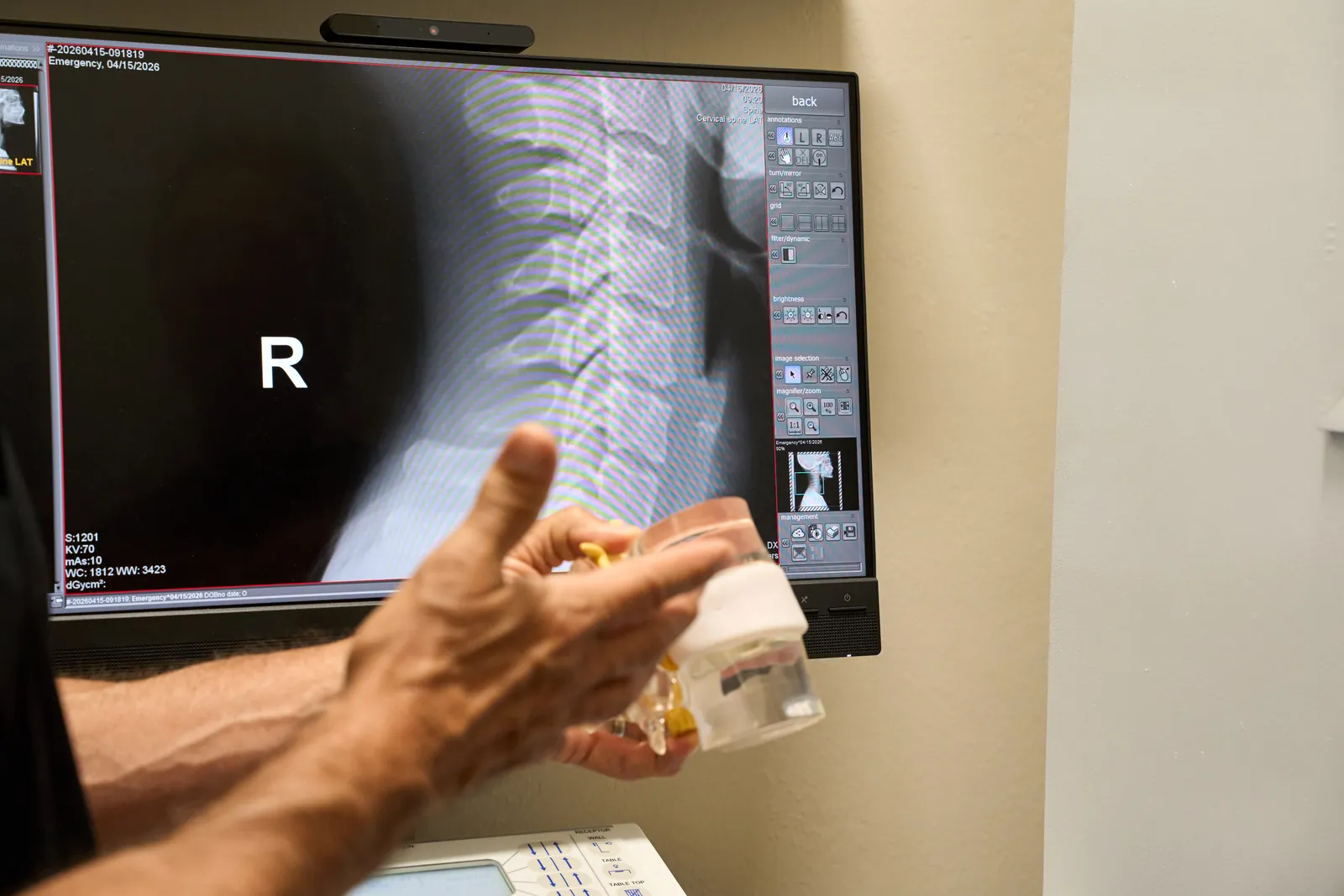
An exam at Novaré starts with your history, how the crash happened, and where you hurt. New patients get digital x-rays on the first visit. When a disc or soft tissue injury is suspected, we coordinate an MRI.
Bring your crash report and a list of your symptoms so the record is complete from day one. Note when each symptom started, even if it seemed small at the time. That timeline helps both the exam and your PIP paperwork.
Both our Fort Myers and Lehigh Acres clinics see accident patients, with same-day accident appointments. Our staff speak English and Spanish.
Complex and injury cases have oversight from our MD medical director. If the exam points to something outside chiropractic care, the right move is a referral, and we'll say so plainly.
The questions people ask most about stiffness and aches after a crash, answered in plain language.
Want a clear answer about your stiffness?
You don't have to guess whether your stiffness is ordinary soreness or something more. If you were in a crash anywhere in Lee County, an exam can give you a straight answer. Imaging, when it's needed, adds a clear record of what you're dealing with. Reach us through our contact page or call our Fort Myers office at (239) 893-2225.
This article was written and reviewed by Dr. Ivan Bracic, DC, founder and clinical director of Novaré Injury Care and Rehab in Fort Myers and Lehigh Acres, Florida. Trauma Team certified and a Certified Independent Chiropractic Examiner, Dr. Bracic brings more than 30 years of clinical experience across a career spanning Illinois and Florida. He has served Southwest Florida since founding Novaré in 2019.
Frequently Asked Questions
How long after a car accident can stiffness start?
Stiffness can start at the scene or show up later. Cleveland Clinic notes that some whiplash symptoms take at least 12 hours to appear, and sometimes a full day or a few days. A late start is common after a crash, so it is not proof that nothing is wrong. Get checked even if you felt fine when you left the scene.
Should I get checked if I am only a little stiff?
Yes, it is worth an exam. Mild stiffness and an early sprain or strain can feel the same in the first few days, and only a hands-on exam and imaging when needed can tell them apart. An early visit also creates a medical record that connects your symptoms to the crash, which matters for a Florida PIP claim.
What symptoms after a crash mean I should go to the ER?
Go to the emergency room or call 911 for numbness, weakness in an arm or leg, a severe headache, or loss of bladder or bowel control. The same goes for confusion, trouble speaking, or pain that keeps getting sharply worse. These are not symptoms to watch at home or bring to a regular appointment. Get emergency care first, then follow up once you are cleared.
Does PIP pay for an evaluation for stiffness after an accident?
Florida law ties PIP medical benefits to receiving initial care within 14 days after the accident, and the statute sets a $10,000 limit for medical and disability benefits. The statute caps medical benefits at $2,500 unless a qualifying medical provider determines you had an emergency medical condition. Whether a particular visit is paid depends on your policy and your insurer. Novaré accepts PIP and self-pay, and our team can explain how billing works before you start.
This article is educational and is not medical or legal advice. It does not diagnose any condition or promise a specific result. If you were in a crash, get evaluated by a qualified provider, and speak with your insurer or a licensed attorney about your specific coverage and rights.