
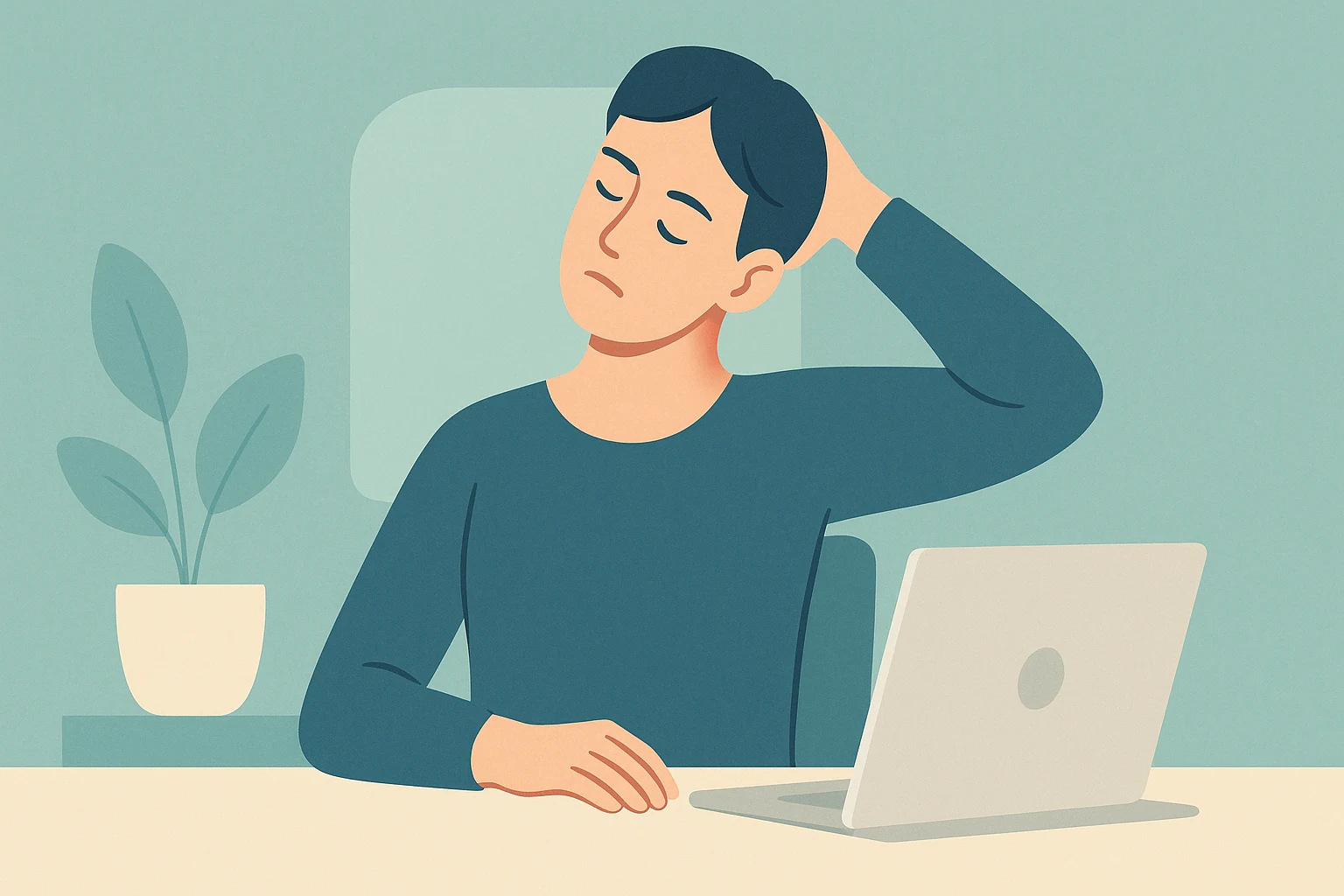
To relieve neck pain at home, ease off hard activity for a day or two, use ice early and heat later, and keep your neck moving gently instead of holding it still. Most everyday neck strains respond to those simple steps, along with fixing how you sit and sleep. If your neck hasn't improved after about a week, our neck pain treatment in Fort Myers and Lehigh Acres starts with an exam to find the cause.
How can you relieve neck pain at home?
Rest briefly, use ice then heat, and add gentle motion. MedlinePlus, from the National Library of Medicine, recommends pausing normal physical activity for the first few days, using ice and then heat, and then starting slow neck movements like turning and tilting. Follow the seven steps below in order, and track how your neck feels each morning.
I'm Dr. Ivan Bracic, DC, founder of Novaré Injury Care and Rehab in Fort Myers. I've cared for more than 30,000 patients across Illinois and Florida since 1994. Most of the neck pain I see started with something ordinary, like a long drive, a new desk chair or a bad night's sleep.
The goal of home care is to calm the sore tissue and get normal motion back without stirring things up. Holding your neck rigid for days usually makes it stiffer.
7 steps to relieve neck pain at home
These steps come from MedlinePlus guidance and what I recommend to patients for an everyday neck strain.
- Ease off for a few days. Per the MedlinePlus neck pain self-care guide, stop normal physical activity for only the first few days. Short walks and light chores are usually fine.
- Use ice, then heat. Ice the sore area for the first 48 to 72 hours, then switch to heat from a warm shower, compress or heating pad. Never fall asleep with either one on your skin.
- Use over-the-counter pain relief if it's safe for you. MedlinePlus lists ibuprofen and acetaminophen. Follow the label, and check with your pharmacist or doctor if you take other medicines or have stomach, kidney or liver problems.
- Move your neck gently. After the first few days, slowly turn your head side to side and tilt your ear toward each shoulder. Stay in a range that feels like a stretch, not a sharp pain.
- Stretch the tight side. I walk through a simple seated stretch in a short video on a neck stretch for tight neck muscles, holding the chair seat and leaning gently without forcing it.
- Fix your desk and phone habits. MedlinePlus suggests stretching your neck every hour or so, keeping documents at eye level, using a headset for long calls, and choosing a chair with a straight back.
- Set up your sleep. MedlinePlus recommends a firm mattress and a pillow that supports your neck. My guide to the best pillow for neck pain covers height and shape by sleep position.
Neck habits to avoid while you heal
Some common habits slow recovery down. These are the ones I see most:
-
Lifting heavy objects or twisting hard in the first weeks. MedlinePlus advises avoiding heavy lifting and neck or back twisting for the first 6 weeks after the pain starts.
-
Wearing a soft collar all day. MedlinePlus notes a soft collar may help briefly, but wearing one for long periods can weaken the neck muscles.
-
Looking down at a phone or laptop for long stretches.
-
Cracking or forcing your own neck to get relief.
-
Jumping back into hard workouts on a good day. MedlinePlus suggests slowly starting exercise again after 2 to 3 weeks.
Stress and neck muscle tension
Stress shows up in the neck for many people. Shoulders creep toward the ears, the jaw clenches, and the muscles at the base of the skull stay switched on all day. MedlinePlus lists relaxation methods such as yoga, tai chi and massage as ways that may help.
A few slow breaths with your shoulders dropped, a couple of times an hour, is a simple place to start. It costs nothing and gives the muscles a break.
Why your neck pain keeps coming back
If the same stiffness returns every week, home care is only treating the flare. Something in how you sit, move or sleep keeps setting it off. I explain what I look at when a neck stays tight in a short video on why your neck is always tight, from posture and mobility to strength.
In the clinic, the usual suspects are rounded shoulders, a stiff upper back that makes the neck do extra work, weak muscles that hold the head up, and old injuries from a fall or car crash.
Neck pain red flags
Most neck pain is a muscle or joint strain. A few symptoms point to something that needs a doctor quickly. Per MedlinePlus, call 911 or go to the emergency room for:
-
Fever and headache with a neck so stiff you can't bring your chin to your chest.
-
Shortness of breath, sweating, nausea, vomiting, or arm or jaw pain along with neck pain.
-
Neck pain after a fall, blow or crash when you can't move an arm or hand.
Contact a provider soon if any of these apply:
| Sign | Why it matters |
|---|---|
| No improvement after about a week of self-care | The cause may need an exam |
| Numbness, tingling or weakness in an arm or hand | A nerve may be irritated |
| Pain that's worse lying down or wakes you at night | It needs a closer look |
| Trouble swallowing or breathing | It needs prompt medical care |
| Loss of bladder or bowel control, or trouble walking | It needs urgent medical care |
Neck pain care at our Fort Myers clinic
When home care stalls, I want to find out why before we treat anything. Our first visit typically runs 1 to 1.5 hours, and most of that time is with me.
- Your history. When it started, what makes it better or worse, and how you work and sleep.
- A hands-on exam. Neck and upper back motion, posture, strength, and nerve checks in your arms.
- Digital X-rays on site. Taken when your exam calls for them, and reviewed with you the same day.
- A plan you understand. In-clinic care if you need it, plus home exercises that fit your day.
We see patients in Fort Myers and Lehigh Acres, in English and Spanish.
See neck pain treatment in Fort Myers
The questions I hear most about easing neck pain at home, answered plainly.
Dr. Ivan Bracic, DC, is the founder and clinical director of Novaré Injury Care and Rehab in Fort Myers and Lehigh Acres, Florida. He has cared for more than 30,000 patients across Illinois and Florida since 1994 and is Trauma Team certified.
- When pain travels into the arm or leg: how to relieve a pinched nerve.
Frequently Asked Questions
What is the fastest way to relieve neck pain at home?
Ease off for a day or two, use ice early, and keep the neck gently moving. MedlinePlus suggests ice for the first 48 to 72 hours, then heat, along with slow turning and tilting movements. Most simple neck strains feel better when you combine those steps rather than relying on one.
Should I use heat or ice for neck pain?
Start with ice, then switch to heat. MedlinePlus advises ice for the first 48 to 72 hours and heat after that. Never fall asleep on a heating pad or ice pack, since both can injure the skin.
Is it OK to stretch a stiff neck?
Yes, if you keep it gentle. MedlinePlus suggests slow neck movements after the first few days, and I tell patients to stop short of sharp pain. If a stretch sends tingling or pain down your arm, stop and get checked.
How long does neck pain usually last?
It varies with the cause, so there's no single timeline. MedlinePlus advises calling a provider if symptoms don't improve after about one week of self-care. Use that one-week mark as your cue to book an exam rather than waiting it out.
When is neck pain an emergency?
Neck pain with fever and a neck too stiff to touch your chin to your chest, or with chest, arm or jaw pain and shortness of breath, needs emergency care, per MedlinePlus. So does neck pain after a fall or crash if you can't move an arm or hand. Call 911 for any of those.
This article is educational and is not medical advice. Neck pain has many causes, and some need prompt medical attention. If you have neck pain with arm numbness or weakness, pain after a fall or crash, fever with a stiff neck, or chest or jaw pain, get evaluated by a qualified provider right away.