
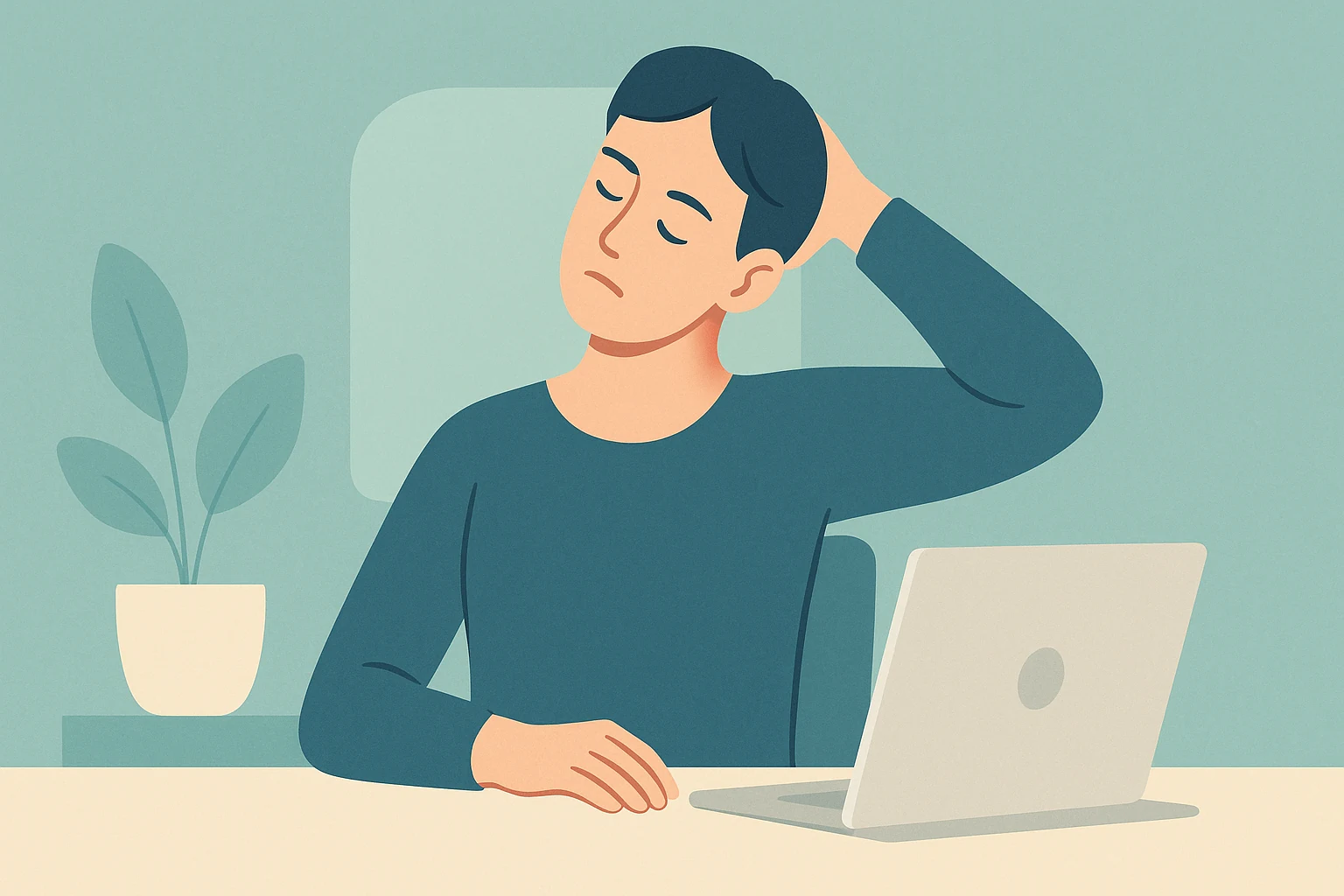
Can you decompress your spine at home? Yes. You can take real pressure off your spine at home with a handful of simple positions and gentle movements, and most people feel some relief from them. Just know that what you are doing is self-traction and deloading, which is not the same thing as the clinical spinal decompression we do in the office. I'm Dr. Ivan Bracic, DC, the chiropractor at Novaré Injury Care in Fort Myers, and this is the honest version of what works, what does not, and where the line is. Below are five ways to give your spine some space at home, plus the mistakes I most want you to avoid.
The short answer: what decompressing your spine at home actually means
Your spine is a stack of bones separated by discs, and those discs act like cushions. All day, gravity and the way we sit press down through that stack, which is called axial load. The discs slowly lose a little height, and the small joints and nerves around them get less room to work. Decompression, in plain terms, is anything that reverses that squeeze for a while so the discs, joints, and nerves get breathing room.
In the clinic that can mean a motorized decompression table that applies measured, targeted traction. At home it means using gravity, posture, and body position to unload the same structures more gently. You will not replicate a clinical table on your living room floor, but you can absolutely take pressure off, and doing it a little every day tends to matter more than doing it hard once.
1. Constructive rest: unload flat on your back
The simplest place to start is also the one I recommend most. Lie on your back on the floor with your knees bent and your lower legs resting on a couch cushion or a chair seat, so your hips and knees are both around 90 degrees. This is called the constructive rest position. Taking your legs out of the equation lets the muscles that pull on your lower back finally switch off, and lying flat removes the standing load your discs carry all day.
Give it 10 to 15 minutes and breathe slowly into your belly. You are not stretching hard or forcing anything. You are letting the spine settle into a neutral, unloaded position while tight low-back muscles release. A lot of the Fort Myers patients I show this to are surprised that something this passive helps, but easing the muscular pull is often what lets the joints open up on their own.
2. A gentle dead hang for the low back
Hanging from a sturdy bar lets gravity do the traction for you. Grab a pull-up bar or a secure doorway bar, and let your body hang while your feet stay lightly on the floor or a step, so you control how much weight you give it. You are not trying to fully suspend yourself or set a record. You want a mild, comfortable pull through the spine, held for maybe 20 to 30 seconds, repeated a couple of times.
The traction opens a little space between the vertebrae in your lower back and can feel great after a long day of sitting. Keep it gentle. Come off the bar slowly rather than dropping, because a hard landing undoes the point. If you have any shoulder problem, this is not the one for you, and I would skip it and use another option on this list.
3. Cat-cow to mobilize the whole spine
Cat-cow is a slow, segment-by-segment movement on your hands and knees. You round your back up toward the ceiling like a cat, then let it sink and arch as you lift your head and tailbone. Moving through both directions gently works every level of the spine and encourages the discs to take on and release fluid, which is part of how they stay healthy.
This one is less about pulling the spine apart and more about restoring motion, and motion is what keeps a stiff back from getting stiffer. Do it slowly, matching the movement to your breath, for maybe 8 to 10 rounds. If any range hurts, shrink the movement rather than push through it. Small and smooth beats big and forced every time.
4. Prone press-ups for the lower back
If your back feels better when you stand and worse when you sit for a long time, gentle extension may help. Lie face down, place your hands under your shoulders, and press your upper body up while your hips and legs stay relaxed on the floor. Only go as high as stays comfortable. Many people only need to come up onto their forearms.
This gentle extension can help some low-back discomfort feel better, and it counters the hours we spend rounded forward over phones and desks. But it does not suit everyone. If pressing up sends pain or tingling down your leg, stop and leave this one alone. That response is a sign to get evaluated rather than to keep going, and I come back to it in the FAQ below.
5. A rolled towel or foam roller to open the mid-back
The upper and mid-back, the part between your shoulder blades, gets locked into a slumped position from screens and from driving around Lee County. Lie back over a foam roller placed across your mid-back, or a firm rolled towel if you do not have a roller, support your head with your hands, and let your upper back drape gently over it. You can slowly roll an inch or two up and down to reach a few levels.
This opens the thoracic spine and reverses that forward-hunched posture, which takes strain off both the neck above and the lower back below. Keep the roller in the mid-back and off your neck and low back. Thirty seconds to a minute is plenty. If it feels like too much, a thinner rolled towel gives you a gentler version of the same idea.
What to avoid when you decompress your spine at home
Just as important as what to do is what to skip. First, do not crack or yank your own neck, or twist your low back hard to force a pop. Self-manipulation is unpredictable, you cannot control which joint moves, and I see people irritate a stiff area this way more often than they help it. Second, be cautious with inversion tables. Hanging fully upside down raises blood pressure and pressure in the eyes, so it is not a casual purchase, especially if you have glaucoma, high blood pressure, or heart concerns. Third, do not chase intensity. More pull and more time is not better, and forcing a stretch that hurts tends to leave you sorer than when you started. Gentle and frequent wins.
The biggest thing to avoid is pushing through the wrong symptoms. Mild stiffness and a dull ache usually respond well to the gentle work above. But pain, numbness, tingling, or weakness that runs down an arm or a leg, or symptoms that keep getting worse, are a signal to stop the home routine and get checked. Those can point to a nerve or disc issue that needs a hands-on look, not more traction.
A note on scope: this article explains gentle ways to take pressure off your spine at home and where the limits are. It is educational, not a diagnosis or medical advice. If your pain is significant, spreading, or not improving, see a qualified provider before continuing any home routine.
The questions I hear most from Fort Myers patients trying to take care of their back at home, answered plainly.
Give your spine some space, and know when to get it checked
These five moves are a solid, low-risk way to take pressure off your spine at home, and for a lot of everyday stiffness they are all you need. Where I would draw the line is anything that lingers, spreads, or comes with numbness or weakness. That is where a hands-on exam earns its keep, because we can find what is actually driving it rather than guessing. If your back or neck is not settling down, or you just want a professional to check your spine and show you the right home routine for your situation, reach out through our contact page and we will get you in. Our chiropractic care team here in Fort Myers works with people across Southwest Florida every week, and we are glad to help you sort out what is going on.
This article was written and reviewed by Dr. Ivan Bracic, DC, founder and clinical director of Novaré Injury Care in Fort Myers, Florida. A licensed Doctor of Chiropractic, Dr. Bracic has spent more than 30 years caring for spine and injury patients across Illinois and Florida.
Frequently Asked Questions
Can you really decompress your spine at home, or do you need a machine?
You can take real pressure off your spine at home using gravity, posture, and simple positions like lying flat with your legs supported or a gentle dead hang from a bar. What you are doing is self-traction and deloading, which many people find helpful for everyday stiffness. It is not identical to a clinical decompression table, which applies measured, targeted traction, but the home versions are gentle, low cost, and often enough for mild, run-of-the-mill back tension.
How often should I do these spinal decompression exercises?
For most people, a little every day beats a lot once in a while. A few minutes of the gentler options, like constructive rest or cat-cow, can be done daily, and the movement helps your discs and joints stay comfortable. Keep everything in a range that feels easy, not forced. If a particular move ever makes your pain worse or sends symptoms down an arm or leg, stop that one and get evaluated rather than pushing through it.
Are inversion tables a safe way to decompress your spine?
Inversion tables can provide traction, but hanging fully upside down raises blood pressure and pressure in the eyes, so they are not a casual purchase for everyone. If you have high blood pressure, glaucoma, heart concerns, or you are unsure, check with a provider before using one. Plenty of the gentler options in this article give you similar relief with far less to worry about, which is why I usually steer people toward those first.
When should I stop home decompression and see a chiropractor?
Stop the home routine and get checked if you have numbness, tingling, or weakness running down an arm or leg, pain that keeps getting worse, or symptoms that are not improving after a week or two of gentle care. Those can point to a nerve or disc issue that needs a hands-on exam rather than more traction. When in doubt, a professional evaluation is the safe call, and it usually saves you time in the long run.
This article is educational and is not a diagnosis or medical advice. If your pain is significant, spreading, or not improving, or if you have numbness or weakness, see a qualified provider before starting or continuing any home routine.