
I'm Dr. Ivan Bracic, DC, founder and clinical director of Novaré Injury Care and Rehab in Fort Myers and Lehigh Acres. Piriformis syndrome and sciatica can feel almost identical, with pain in the buttock that may travel down the back of the leg. The difference is where the trouble starts.
Piriformis syndrome begins with a hip muscle pressing on the sciatic nerve, while sciatica more often starts at the spine. An exam, and sometimes an MRI, is how a provider works out which one is more likely.
That distinction changes the plan. Treating a disc problem like a tight muscle can delay the care that fits. If you already know your pain comes from the spine, our page on sciatica treatment covers that side in more detail.
What is the difference between piriformis syndrome and sciatica?
Piriformis syndrome is a muscle problem that irritates the sciatic nerve, while sciatica usually comes from the spine. Cleveland Clinic explains that the piriformis muscle presses on the sciatic nerve in piriformis syndrome, while a disc or stenosis can cause sciatica. Think of piriformis syndrome as one possible source of sciatic nerve pain.
The piriformis is a flat, narrow muscle running from the lower spine to the top of the thigh. The sciatic nerve most commonly runs underneath it. When the muscle tightens, spasms, or swells, it can squeeze the nerve at that one spot in the buttock. Sciatica describes the symptom, and piriformis syndrome names one possible cause of it.
How common is piriformis syndrome?
Piriformis syndrome is less common than spine-related sciatica. Cleveland Clinic cites estimates that it causes only about 0.3% to 6% of lower back pain. Keep that in mind before assuming a muscle is behind your leg pain.
Sciatica itself is far more familiar. Cleveland Clinic calls sciatica one of the most common causes of leg pain seen in medical care. Because the two can feel so alike, buttock pain gets labeled the wrong way in both directions.
How do piriformis syndrome symptoms differ from sciatica?
The patterns can differ, but none of them proves anything alone. Piriformis syndrome tends to center in the buttock, and long periods of sitting can bring it on, per Cleveland Clinic. Track when your pain flares and bring those notes to your exam.
Spine-related sciatica more often starts in the lower back before traveling into the hip and leg. Numbness and tingling can happen with either one, so they don't settle the question on their own. Either condition can still produce buttock pain, leg pain, or both.
Other details are worth noting too. Pain that builds while driving or sitting on a hard chair, then eases when you stand, is a pattern to mention. Pain that gets worse when you cough, sneeze, or bend is another pattern Cleveland Clinic lists for sciatica, so mention it too.
Why can't you self-diagnose piriformis syndrome?
There is no single test that confirms piriformis syndrome. Cleveland Clinic says diagnosis can be difficult and often means ruling out other causes with tests like an MRI or EMG. Avoid choosing stretches or treatments based on a guess.
Online checklists can't tell a tight piriformis from a disc pressing on a nerve root. Stretching aggressively for the wrong problem can flare symptoms. Waiting on a spine problem that's getting worse can cost you strength in the leg.
A provider may also check other sources of buttock pain, such as the sacroiliac joint or the hip itself. Each one calls for a different plan, which is why the exam comes before the treatment.
How does an exam tell piriformis syndrome from a spine problem?
An exam compares how your hip, buttock, and back respond to specific movements and pressure. A provider presses on and moves your hip and leg, then checks your back, reflexes, strength, and sensation. Expect questions about sitting, driving, and what makes the pain better or worse.
At Novaré, new patients get digital x-rays on the first visit. When a disc or nerve root problem is suspected, we coordinate an MRI to rule spine causes in or out. If the spine looks clear and the hip findings line up, piriformis syndrome becomes the more likely answer.
What treatment may help piriformis syndrome?
Conservative care is the usual starting point, and several options may help. Cleveland Clinic lists physical therapy for the piriformis, injections in some cases, and surgery only if other therapies fail. Start with the least invasive option that fits your exam.
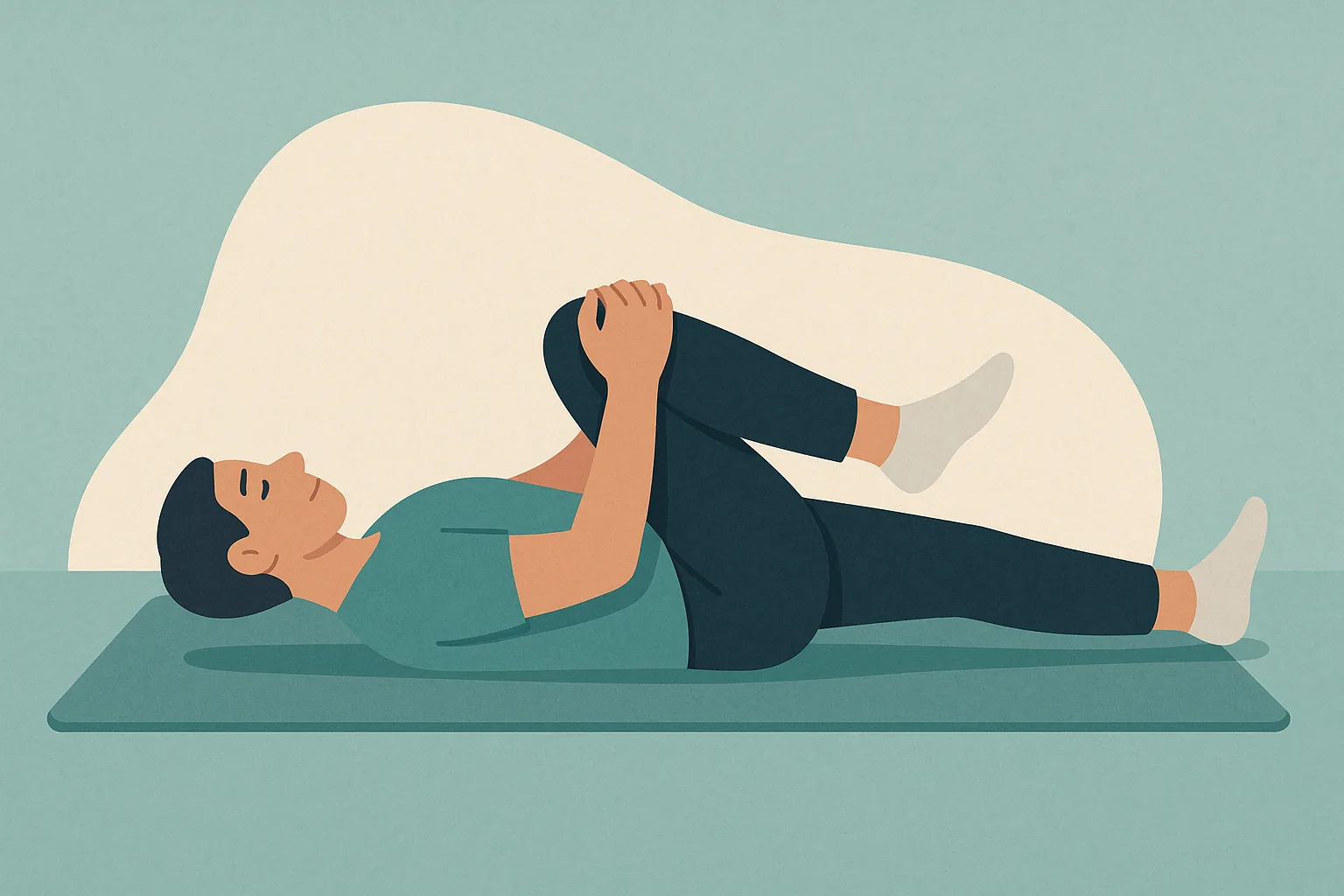
At Novaré, manual therapy works on the muscle and nearby tissue. Shockwave therapy may help ease stubborn muscle tension and pain. Gentle stretches can help between visits, and our guide to sciatica exercises includes moves worth asking about.
How care progresses depends on how you respond, so we don't set a timeline in advance. Progress is usually judged by how long you can sit, drive, or walk comfortably. If the pain isn't changing, that's a reason to re-examine and consider imaging rather than repeat the same plan.
When is buttock or leg pain an emergency?
Sudden or worsening leg weakness, new bladder or bowel changes, and numbness between the legs or in the inner thighs need emergency care whichever condition you suspect. Cleveland Clinic lists muscle weakness and loss of bladder or bowel control as serious sciatica symptoms. Go to the emergency room right away if these appear.
The same goes for leg weakness that is getting worse quickly or pain after a fall or crash. Those situations need imaging and a medical evaluation first. Muscle-focused care comes later, once the serious causes are ruled out.
The questions people ask most about piriformis syndrome and sciatica, answered in plain language.
Not sure whether it is your hip or your spine?
You don't have to figure it out alone. A hands-on exam, x-rays, and an MRI when it's warranted can show where the pain starts. From there, you'll know which care fits it. Reach us through our contact page or call our Fort Myers office at (239) 893-2225.
This article was written and reviewed by Dr. Ivan Bracic, DC, founder and clinical director of Novaré Injury Care and Rehab in Fort Myers and Lehigh Acres, Florida. Trauma Team certified and a Certified Independent Chiropractic Examiner, Dr. Bracic brings more than 30 years of clinical experience across a career spanning Illinois and Florida. He has served Southwest Florida since founding Novaré in 2019.
Frequently Asked Questions
What is the difference between piriformis syndrome and sciatica?
Piriformis syndrome is one specific cause of sciatic nerve irritation, where the piriformis muscle in the buttock presses on the nerve. Sciatica is the broader term for pain along the sciatic nerve, and it commonly starts at the spine, for example from a herniated disc or spinal stenosis. The symptoms can overlap, which is why an exam is needed to tell them apart.
Can I tell piriformis syndrome from sciatica on my own?
Not reliably. Cleveland Clinic notes there are no specific tests for piriformis syndrome and that diagnosis often involves ruling out other causes. Pain with sitting or pain centered in the buttock is a clue, not a diagnosis. A hands-on exam, and imaging when a spine problem is suspected, is the safe way to know.
Does piriformis syndrome show up on an MRI?
There is no single scan that confirms piriformis syndrome. An MRI is most useful for ruling out spine causes such as a herniated disc or spinal stenosis, which can produce similar leg pain. When the spine looks clear and the exam points to the hip, piriformis syndrome becomes more likely.
Can shockwave therapy help piriformis syndrome?
Shockwave therapy and manual therapy may help ease the muscle tension and pain that come with piriformis syndrome for some people. Responses vary, and neither replaces a proper diagnosis. The first step is an exam to confirm that the hip muscle, and not the spine, is the likely source.
This article is educational and is not medical advice. It does not diagnose any condition or promise a specific result. Buttock and leg pain has several possible causes that can only be sorted out with an exam. If you have sudden or worsening leg weakness, numbness between the legs or in the inner thighs, or new bladder or bowel changes, seek emergency care right away.