
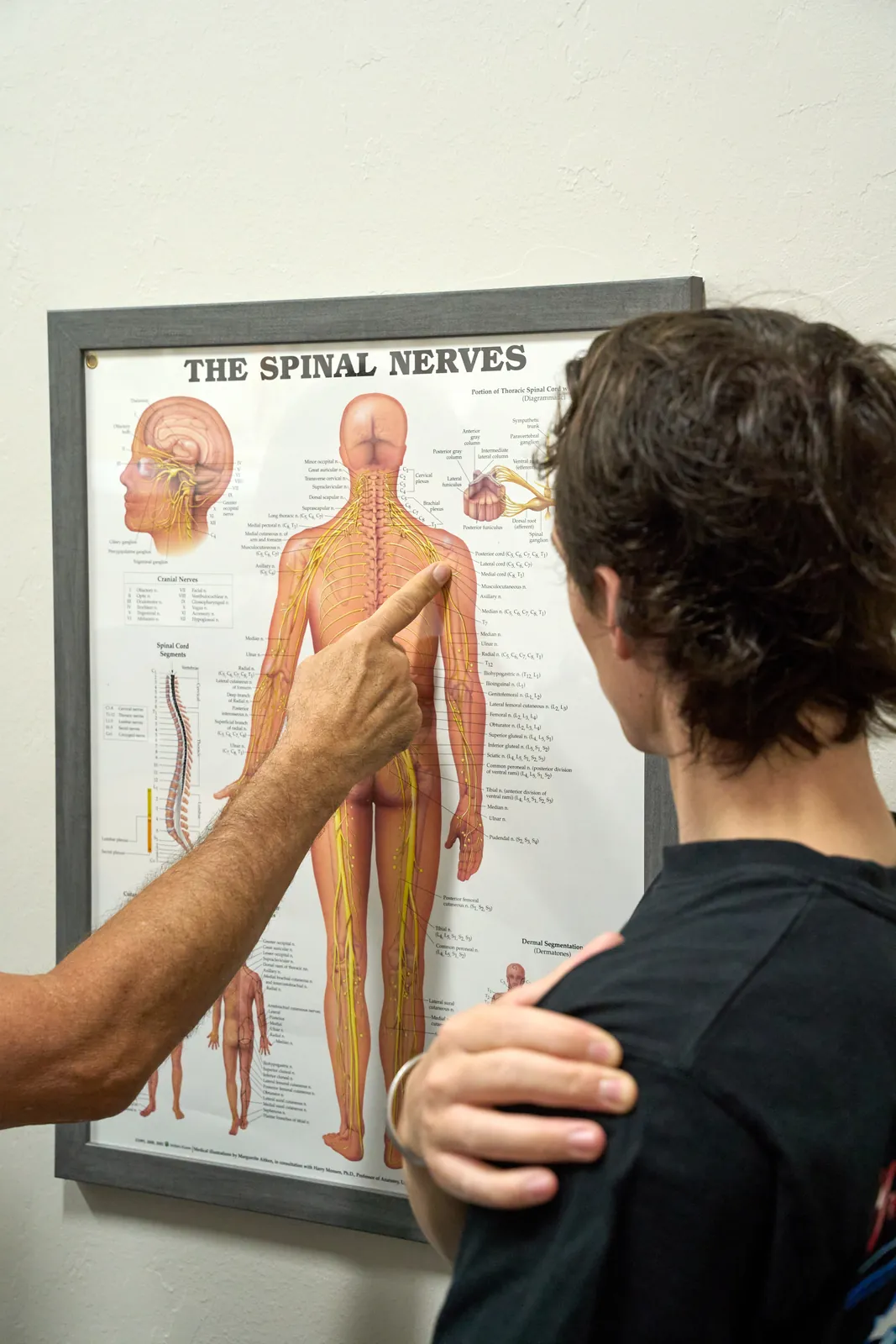
I'm Dr. Ivan Bracic, DC, founder and clinical director of Novaré Injury Care and Rehab in Fort Myers and Lehigh Acres. Peripheral neuropathy often starts quietly, with tingling toes or a foot that feels a little numb. Those early signs are worth taking seriously, because finding the cause sooner gives you more options.
If you already know you have neuropathy and want to understand care options, our neuropathy treatment page covers that side. This article stays with the signs.
Peripheral neuropathy means damage to the nerves outside the brain and spinal cord. NINDS says it affects millions of people in the U.S. Below are six early signs, what they can feel like, and the changes that need urgent care.
What are the early signs of peripheral neuropathy?
The early signs are usually numbness, tingling, burning pain, balance trouble, and weakness, often starting in the feet. The NHS lists these as the main symptoms of peripheral neuropathy and says to see a doctor at the early signs. Note when each one started and whether it's spreading.
Symptoms depend on which nerves are affected. NINDS explains that sensory, motor, and autonomic nerves each cause different problems. They can develop over days, weeks, or years.
1. Numbness or tingling that starts in the feet
A pins and needles feeling or patches of numbness in the toes is often the first thing people notice. Cleveland Clinic notes that diabetes, the most common cause of peripheral neuropathy, often affects the feet first. Pay attention if it shows up in both feet.
The NIDDK says symptoms usually affect both sides of the body. Tingling in only one foot or hand can still be neuropathy. It can also point to a pinched nerve in the spine, which is one reason an exam matters.
2. Burning or stabbing nerve pain
Nerve pain often feels different from a sore muscle. Cleveland Clinic describes neuropathic pain as burning, tingling, stabbing, or like an electric shock. Describe your pain in those words at your appointment, because they help point toward a nerve cause.
Timing is another clue. The NIDDK says symptoms are often worse at night, and NINDS notes nerve pain can be worse at night and disrupt sleep.
3. Pain from a light touch
Some people find that something gentle suddenly hurts. NINDS calls this allodynia and gives the example of pain from the touch of bedsheets. Mention it even if it sounds odd, since it's a recognized nerve symptom.
4. Trouble feeling heat or small injuries
Neuropathy can dull the warning signals your feet normally send. Cleveland Clinic lists an inability to sense temperature changes among the symptoms. The NIDDK warns that you may not notice pressure or injuries that lead to blisters and sores.
That makes a daily look at your feet worth the habit, especially with diabetes. The NIDDK recommends checking your feet every day and a foot exam at least once a year.
5. Balance problems or unsteady walking
Feeling unsteady on your feet can come from the nerves, along with strength or inner ear causes. NINDS explains that loss of position sense can make it hard to keep your balance when your eyes are shut. Notice whether you feel less steady in the dark or on uneven ground.
The NHS also lists loss of balance and coordination as a main symptom. Balance changes raise the risk of falls, so bring them up early.
6. Muscle weakness or cramps
When motor nerves are involved, muscles can weaken. The NHS lists muscle weakness, especially in the feet, and NINDS lists painful cramps and visible muscle twitching. Watch for tripping on a toe or trouble gripping objects.
Weakness that builds slowly belongs in a prompt appointment. Weakness that comes on fast is a different story, covered in the urgent care section below.
What causes the early signs of neuropathy?
Many different conditions can damage nerves, so the cause has to be found. NINDS says diabetes is the leading cause in the U.S., and lists vitamin B12 deficiency, alcohol use, certain medications, infections, and injuries as other causes. Ask your physician which blood tests make sense for you.
Cleveland Clinic adds that age is a risk factor, and that pinched or compressed nerves can cause neuropathy too. Whether symptoms can improve depends heavily on that cause. Our article on whether neuropathy can be reversed explains why.
When do neuropathy symptoms need urgent care?
Most neuropathy builds slowly, but some changes are emergencies. NINDS explains that in Guillain-Barré syndrome, weakness often starts in the feet and worsens over hours or days. Call 911 or go to the emergency room for any of these:
- Sudden weakness, or weakness that climbs from the feet up the legs
- Numbness or weakness that spreads quickly over hours or days
- Trouble breathing, swallowing, or walking
- Sudden numbness or weakness on one side of the face or body, which can be a stroke
Why does a foot wound need prompt care with diabetes?
A foot wound on a numb foot can get worse without you feeling it. The NIDDK says to call or see your doctor right away if you notice any foot problems. Look at your feet daily for cuts, blisters, redness, or swelling.
The NHS warns that an untreated foot ulcer can become infected. Signs of infection around a wound, such as spreading redness, warmth, or drainage, need same-day medical care.
How is neuropathy evaluated and treated?
An evaluation starts with your history, a hands-on exam, and checks of sensation, reflexes, strength, and balance. Your physician leads the search for medical causes, including blood tests. At Novaré, we take digital x-rays on the first visit and coordinate an MRI when a pinched nerve in the spine is suspected.
Supportive care fits alongside your physician's plan. Class IV laser therapy may help ease burning, tingling, and nerve pain for some people, and responses vary. Keep taking any medication you've been prescribed, and talk with your physician before changing it.
The questions people ask most about the early signs of peripheral neuropathy, answered in plain language.
Noticing tingling or numbness that won't go away?
You don't have to wait for it to spread. An exam, and imaging when it's warranted, can help sort out whether the nerves or the spine are involved, and we coordinate with your physician from there. Reach us through our contact page or call our Fort Myers office at (239) 893-2225.
This article was written and reviewed by Dr. Ivan Bracic, DC, founder and clinical director of Novaré Injury Care and Rehab in Fort Myers and Lehigh Acres, Florida. Trauma Team certified and a Certified Independent Chiropractic Examiner, Dr. Bracic brings more than 30 years of clinical experience across a career spanning Illinois and Florida. He has served Southwest Florida since founding Novaré in 2019.
Frequently Asked Questions
What are the first signs of peripheral neuropathy?
The first signs are often numbness, tingling, or a pins and needles feeling in the feet or hands. The NHS lists numbness and tingling, burning or shooting pain, loss of balance, and muscle weakness as the main symptoms. Because these can start mildly, it helps to mention them to a provider early rather than wait for them to spread.
Does peripheral neuropathy usually start in the feet?
Often, yes. Cleveland Clinic notes that diabetes, the most common cause, often affects the nerves in the feet first. The NIDDK adds that symptoms usually affect both sides of the body. Symptoms on only one side are still worth checking, since a pinched nerve in the spine can cause them too.
Why is neuropathy pain worse at night?
The NIDDK says symptoms are often worse at night, and NINDS notes nerve pain can be worse at night and disrupt sleep. Some people find even the touch of bedsheets painful. If pain is keeping you up, tell your physician, since there are options to discuss and the cause still needs to be found.
Can laser therapy help early neuropathy symptoms?
Class IV laser therapy may help ease symptoms such as burning and tingling for some people, and responses vary. It does not replace finding the cause with your physician or managing conditions like diabetes. It also does not replace any medication you have been prescribed. An exam is the honest way to see whether it fits.
This article is educational and is not medical advice. It does not diagnose any condition or promise that symptoms will improve. Keep taking the medications your physician prescribed, and talk with them before changing anything. Call 911 for sudden weakness, weakness that climbs up the legs, or trouble breathing or swallowing. If you have diabetes, contact your physician right away about any foot wound, blister, or sign of infection.