
I'm Dr. Ivan Bracic, and after more than 30 years treating back and nerve pain, most of it here in Southwest Florida, I get the same question constantly: what triggers sciatica? Sciatica is most often triggered by anything that puts steady pressure on the sciatic nerve or its roots in your low back, and the six I see most are long hours of sitting, lifting the wrong way, carrying extra body weight, a weak core, sudden overexertion, and everyday posture habits. The good news is that almost all of these are things you can change. This article walks through each one, why it irritates the nerve, and what to do differently. If sitting is your main trigger, start with my short video on back pain from sitting all day.
First, a quick definition, because the word gets used loosely. Sciatica is not really a diagnosis on its own. It is a set of symptoms, usually pain, tingling, or numbness that travels from the low back through the buttock and down the back of one leg, caused by irritation or compression somewhere along the sciatic nerve. The nerve is the largest in your body, and it starts at nerve roots in the lower spine. When something crowds those roots, often a bulging or herniated disc, and sometimes a tight muscle deep in the hip, you feel it down the leg. The triggers below are the everyday things that tip an already-sensitive nerve into a flare.
1. Sitting for hours without moving
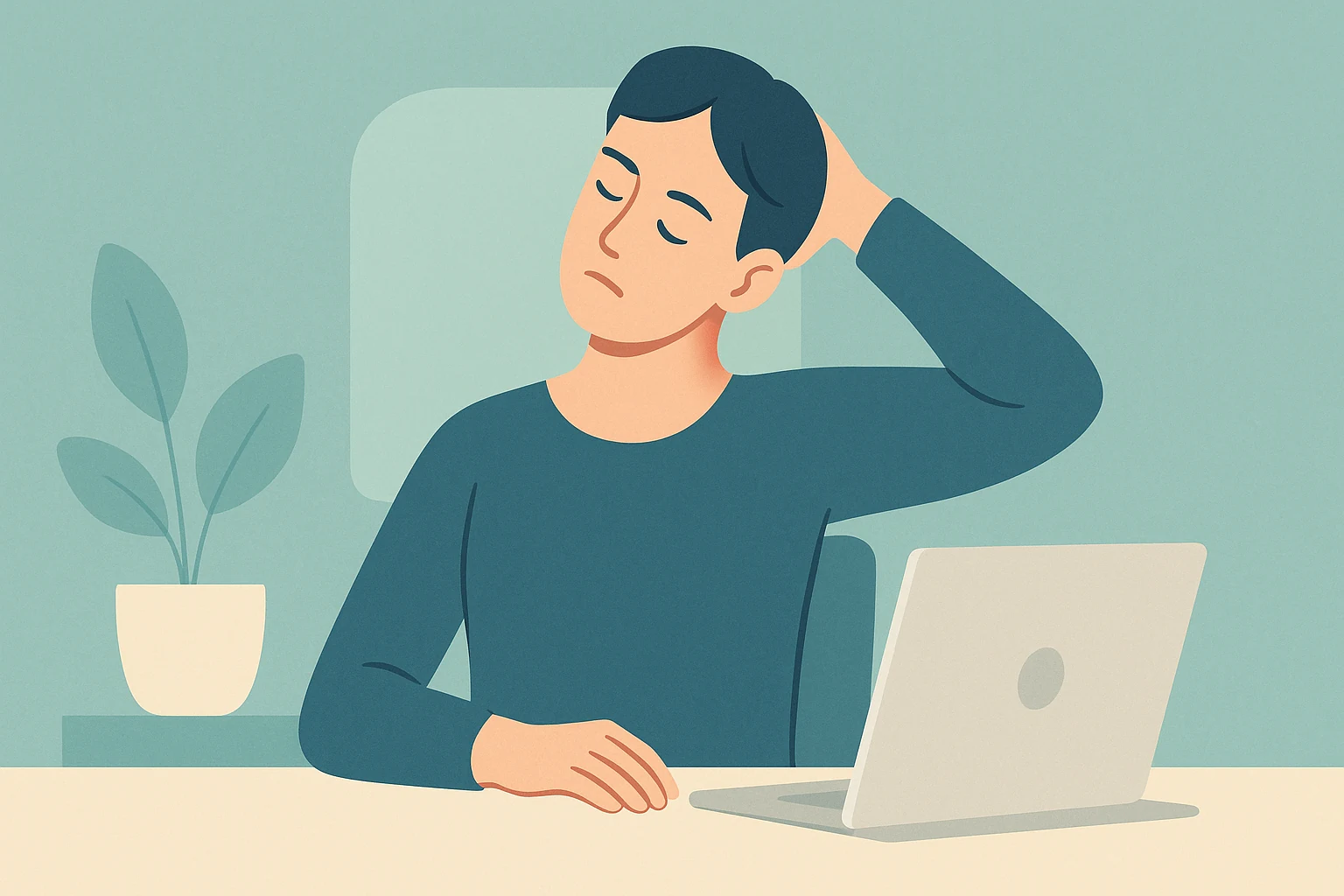
This is the trigger I bring up first because it touches almost everyone. When you sit, the pressure on your lumbar discs is actually higher than when you stand, and it climbs further when you slump forward at a desk or lean over a phone. Hold that position for hours and two things happen: the discs near your sciatic nerve roots stay under load, and the muscles in your hips and glutes get short and tight. Both can crowd the nerve.
I see it in office workers, long-haul drivers, and plenty of people with long Lee County commutes. The fix is not to never sit. It is to break up the sitting. Standing or walking for a minute or two every 30 to 45 minutes takes the sustained pressure off, and it works better than any single "perfect" chair. Set your seat so your hips are level with or slightly above your knees, keep your feet flat, and support the small curve of your low back. When the leg pain is already there, prolonged sitting is usually the thing that keeps feeding it. For an easy way to start breaking it up, I made a short video on exercises you can do sitting down.
2. Lifting the wrong way, especially bending and twisting
The classic sciatica story is bending over to pick something up, twisting at the same time, and feeling a sharp catch in the low back. The mechanism is straightforward. Bending forward loads the front of your discs, and adding a twist under that load is what can push disc material back toward the nerve roots. It does not take a refrigerator. I have seen it triggered by lifting a laundry basket or a bag of mulch the wrong way.
Avoiding it comes down to a few habits worth making automatic. Get close to the object, bend at your hips and knees rather than rounding your back, keep the load near your body, and turn with your feet instead of twisting your spine. If something is heavy or awkward, split the load or ask for help. None of this is about being fragile. It is about keeping the moment of highest pressure off the discs that sit closest to your sciatic nerve.
3. Carrying extra body weight
Extra weight, particularly around the midsection, changes the mechanics of your low back. It increases the everyday load on your lumbar discs and tends to pull the pelvis into a forward tilt, which deepens the curve in the low back and narrows the space the nerve roots pass through. There is also a metabolic side: carrying more weight is associated with more low-grade inflammation, and an irritated nerve does not like inflammation.
I am careful here, because this is not about appearance or blame, and body weight is only one factor among many. But in practical terms, even a modest, gradual reduction in load often eases the day-to-day pressure on the low back for the people I treat. The approach that holds up is unglamorous: steady movement you actually enjoy, walking included, plus attention to overall health rather than crash efforts that flare the back on their own.
4. A weak core and tight hips
Your core is the natural brace for your lumbar spine. When the deep abdominal and back muscles are weak, your spine carries more of the load directly, and small movements that should be effortless start stressing the discs and joints near the sciatic nerve. Pair that weakness with tight hip flexors and short hamstrings, common when we sit a lot, and the low back ends up compensating for range of motion the hips should be providing.
This is one of the most fixable triggers, and it is where conservative care shines. Gentle, progressive core work, hip mobility, and hamstring flexibility give the low back the support it is missing. I am deliberately not prescribing specific exercises here, because the right ones depend on what is actually irritating your nerve, and the wrong ones can flare things. That is exactly the kind of thing a hands-on exam sorts out, and it is a core part of the chiropractic care we provide at Novaré Injury Care in Fort Myers.
5. Sudden overexertion after doing little
I call this the weekend-warrior trigger. You sit most of the week, then spend a Saturday hauling pavers, deep-cleaning the garage, or playing a hard round of pickleball, and your back has no base of conditioning to handle it. The tissues were not ready for the load, and the nerve pays for it. It is not the activity that is the problem. It is the sharp jump from very little to a lot.
The way around it is to ramp up instead of leaping. If you have a big yard project or a return to the gym in mind, build into it over days and weeks rather than one heroic afternoon. Warm up before heavy work, break long tasks into chunks, and give your low back recovery time between hard efforts. Consistent, moderate activity through the week protects you far better than the occasional all-out push, and it is easier on the sciatic nerve.
6. Everyday posture habits that compress the nerve
The last trigger is a collection of small habits that quietly stack up. Sleeping on a worn-out mattress or in a position that kinks the low back. Standing with all your weight cocked onto one hip. Sitting on a thick wallet in your back pocket, which can press directly on the muscle the sciatic nerve runs beneath and irritate it over time. On their own, none of these is dramatic. Repeated day after day, they keep a sensitive nerve provoked.
Fixing them is mostly about awareness. Take the wallet out of your back pocket before you drive or sit for a stretch. Sleep in a position that keeps your spine reasonably neutral, often on your back with a pillow under the knees, or on your side with a pillow between them, on a mattress that actually supports you. Stand evenly on both feet. These are minor changes, and I would not oversell any one of them, but together they remove a surprising amount of the low-level pressure that keeps sciatica simmering.
When sciatica is a red flag, not just a flare
Most sciatica is caused by irritation that responds well to time and conservative care. But some symptoms point to something more serious and should not wait. Get urgent or emergency care if you have numbness in the groin or inner thighs, weakness in the legs that is severe or spreading, any loss of bladder or bowel control, or leg pain that follows a significant fall or accident. These can signal nerve compression that needs prompt attention.
For the more typical picture, leg pain or tingling that lingers past a few days, keeps returning, or disrupts sleep and walking, being seen is still the right move. A hands-on exam figures out what is actually irritating the nerve, which is the part guesswork tends to miss. If you are in Fort Myers or elsewhere in Lee County and your sciatica keeps flaring, the chiropractic care we provide starts with that exam and a plan built around your history and habits. Every person and every back is different, so I cannot promise a timeline, but targeted, conservative care gives most people a solid footing.
A note on scope: this article explains common sciatica triggers and how to reduce them. It is educational, not medical advice, and it is not a diagnosis of your specific situation. For your own back and your own symptoms, rely on an in-person evaluation with a qualified provider.
The questions I hear most from patients in Southwest Florida trying to keep sciatica from taking over their week, answered in plain language.
Tired of sciatica flaring up? Let's find your triggers
You do not have to keep guessing which habits are feeding your leg pain, and you do not have to live around it either. If sciatica keeps interrupting your work, sleep, or workouts here in Fort Myers, a hands-on evaluation can pin down what is actually irritating the nerve and which of these triggers matters most for you. Reach out through our contact page or call our Fort Myers office at (239) 893-2225 to get started, and let's build a plan around your day-to-day.
This article was written and reviewed by Dr. Ivan Bracic, DC, founder and clinical director of Novaré Injury Care in Fort Myers, Florida. A licensed Doctor of Chiropractic, Dr. Bracic has spent more than 30 years caring for back, nerve, and injury patients across Illinois and Southwest Florida, with a focus on conservative, hands-on care.
Frequently Asked Questions
What is the most common trigger of sciatica?
For most people I see, the single biggest trigger is prolonged sitting combined with a weak core, because both put steady pressure on the low back and the discs that sit near the sciatic nerve roots. That is good news, because it means the most common trigger is also one of the most changeable. Getting up to move every 30 to 45 minutes and building a little core strength takes real pressure off the nerve for a lot of people.
Can sitting too much cause sciatica?
Long stretches of sitting do not cause sciatica on their own, but they are one of the more common things that trigger a flare or make an existing problem worse. Sitting increases the load on your lumbar discs and lets the hip and gluteal muscles tighten, and both can crowd or irritate the sciatic nerve. If you sit for work or long Southwest Florida commutes, short movement breaks and a supportive chair setup make a real difference.
How do I keep sciatica from coming back?
The most reliable way to reduce repeat flares is to take the pressure off the nerve day to day: move regularly instead of sitting for hours, lift with your legs and avoid twisting under load, keep your core and hips reasonably strong and mobile, and pay attention to sleep and desk posture. No single habit is a guarantee, and everyone is different, but stacking these changes together tends to lower how often sciatica shows up.
When should I see a chiropractor for sciatica?
It is worth being seen when leg pain, tingling, or numbness lasts more than a few days, keeps coming back, or interferes with sleep, work, or walking. Get urgent care instead for severe or spreading weakness, numbness in the groin or inner thighs, or any loss of bladder or bowel control. A hands-on exam is the reliable way to sort out what is actually irritating the nerve rather than guessing at it.
This article is educational and is not medical advice. Sciatica can have several underlying causes, some of them serious. If you have leg pain, numbness, or weakness, get evaluated by a qualified provider rather than self-diagnosing, and seek urgent care for any red-flag symptoms described below.