
If your neck has been hurting for weeks or months, you've probably tried pain relievers, a heating pad, or some home remedies. Maybe you changed how you sleep, trying to sleep on your back instead of sleeping on your stomach. But the pain comes back anyway.
If you've been told the pain is just stress or tried care that didn't work, you're not alone. And it's not you.
Neck pain is often resistant to general care when it's driven by structural problems in the cervical spine. Short-term pain relief helps for a while. But when the joints, discs, or surrounding tissue are the actual source of your pain, symptomatic care doesn't change what's happening underneath.
What Are the Best Treatments for Chronic Neck Pain?
Treatments for chronic neck pain work best when they target the root cause rather than mask symptoms. Effective options for people with chronic neck pain include:
- Chiropractic adjustments to restore cervical alignment and reduce nerve irritation
- Spinal decompression for herniated discs and spinal cord compression
- Class IV laser therapy to reduce inflammation and support tissue repair
- Soft tissue therapy, including the Graston Technique for neck muscles and fascial adhesions
- Rehabilitative exercise to rebuild cervical strength and prevent recurrence
Patients with chronic neck pain typically see the best results when these options are combined into a plan built around a specific diagnosis. One approach rarely covers every layer of the problem.
To learn how we build that kind of plan, visit our chiropractic care for neck pain page at Novaré Injury Care and Rehab.

Why Chronic Neck Pain Doesn't Always Get Better on Its Own
Chronic neck pain is generally defined as pain lasting longer than 12 weeks. At that point, structural causes are more likely to be driving the problem than an acute muscle strain. But neck pain is often a signal that something structural hasn't been found or addressed. Common doesn't mean permanent.
Neck pain can be caused by disc degeneration, joint restriction, herniation, nerve impingement, or mechanical neck pain from years of strain. Poor posture, old injuries, and degenerative changes are among the leading causes of neck pain in adults. Understanding pain types matters because different structures in the cervical spine respond to different care approaches.
Here's what makes cases of chronic neck pain different from a pulled muscle: neck pain is caused by structural changes that don't show up without imaging. Pain may return after rest in part because the underlying structural issue in the tissue or joints hasn't been addressed. Neck pain may seem manageable at first, but pain over time that keeps returning is a sign that the source hasn't been found.
Neck pain comes in several forms. Axial neck pain stays close to the neck itself. Referred pain travels into the upper back or shoulders. Radiating pain follows the nerve pathway down into the arm. Each of these pain types often points to a different structure as the cause.
Many patients who experience neck pain following a car accident never had it properly evaluated. Neck pain due to an old injury is one of the most common patterns we see in Fort Myers. The pain is often dismissed early, and that delay can make it harder to get ahead of the underlying problem. Pain is often multi-layered in these cases, with joints, discs, and soft tissue all contributing.
Pain is commonly managed with pain medications, over-the-counter pain relievers, or generic physical therapy. These can temporarily ease neck pain and reduce surface symptoms. But when the problem is structural, symptomatic care doesn't change what's happening at the source of your pain.
Novaré Injury Care and Rehab has supported more than 30,000 injury cases over 30-plus years of practice. Neck pain caused by accidents is one of the most common presentations we see. Every new patient starts with a clinical exam and digital X-ray. We build care around what we find, not assumptions.
According to neck pain causes and symptoms from the Mayo Clinic, neck pain can stem from a range of structural causes, including disc degeneration, joint problems, and nerve compression.
Option 1: Chiropractic Adjustments
Chiropractic adjustments are a widely used nonsurgical approach for cervical neck pain, with a substantial body of research supporting their use for joint and disc-related conditions. They restore movement to restricted joints in your neck, which helps relieve pain and stiffness by reducing pressure on the nerves in your neck and the surrounding neck muscles.
Neck pain without proper spinal alignment becomes chronic more often than not. When joints in your neck lose their normal range of motion, pressure on adjacent structures builds over time. That pressure doesn't resolve on its own.
At Novaré Injury Care and Rehab, chiropractic care for neck pain is guided by imaging. Dr. Ivan Bracic, DC, Clinical Director, holds a Level 3 Graston Technique certification. When scar tissue from old neck strains is contributing to the pain, Graston targets specific damaged areas rather than working generically.
Conservative treatments like chiropractic adjustments are widely recommended as a first-line approach before stronger interventions. Therapy for chronic neck pain built around imaging findings rather than guesswork tends to produce results that hold.
People with neck pain who haven't responded to rest or pain relievers often benefit from structured chiropractic care. Physical therapy alongside chiropractic work can further help relieve neck pain and improve function in patients dealing with long-term neck pain.
According to non-surgical treatment for neck pain from the Cleveland Clinic, spinal manipulation and physical therapy are both recommended first-line treatment options for most patients before surgery is considered.
Option 2: Spinal Decompression
When pain comes from a disc issue, such as a herniation or degenerative change pressing on the spinal cord or a nerve root, adjustments may not fully reach the problem. Spinal decompression is a nonsurgical treatment option designed specifically for those types of cervical spine conditions.
Decompression creates controlled negative pressure in the cervical spine. That pressure can reduce compression on a herniated disc and may allow it to retract away from the nerve it's irritating. Neck stiffness, shoulder pain, and referred pain into the arm are often related to disc compression, and these symptoms can ease as pressure decreases.
Knowing the type of neck pain present before starting any decompression protocol is important. A disc pressing on the spinal cord requires a different approach than axial pain from joint restriction. Imaging makes that distinction clear, and neck pain without a proper diagnosis can be treated incorrectly.
Novaré Injury Care and Rehab requires MRI review before any spinal decompression begins. Dr. Bracic has specialized post-graduate training in MRI interpretation. He reads the images himself, marks them up, and explains what he's seeing before recommending a care plan. That's different from clinics that offer decompression without being able to accurately interpret what the MRI shows.
Learn more about our spinal decompression approach and what to expect at your evaluation.
According to neck injuries and disorders from MedlinePlus, structured nonsurgical approaches including physical therapy and targeted spinal care are the recommended starting point for most patients with cervical disc conditions.
Option 3: Class IV Laser Therapy
For back and neck pain where inflammation is part of what's driving the symptoms, Class IV laser therapy offers a non-invasive way to help relieve neck pain without adding pharmaceutical intervention.
Laser therapy delivers targeted light energy into damaged tissue. It has been studied for its effect on chronic musculoskeletal pain and is used in clinical settings for inflammation reduction and tissue repair. It works well alongside chiropractic adjustments or spinal decompression as part of a combined care plan.
Novaré Injury Care and Rehab was the first clinic in Florida selected to research and deploy a proprietary next-generation AI laser technology. This is clinical-grade equipment applied with specific protocols based on the diagnosis: hot and cold applications calibrated to what the patient's condition requires, not a generic setting.
For patients experiencing pain that hasn't responded to pain medications, rest, or home remedies, laser therapy may offer a non-pharmaceutical path forward. Neck pain is often layered. Laser addresses one layer while other treatments work on others at the same time.
To see how laser fits into a complete neck and back care plan, visit our laser therapy for neck pain page for Fort Myers and Lehigh Acres patients.
Option 4: Soft Tissue Therapy and Shockwave
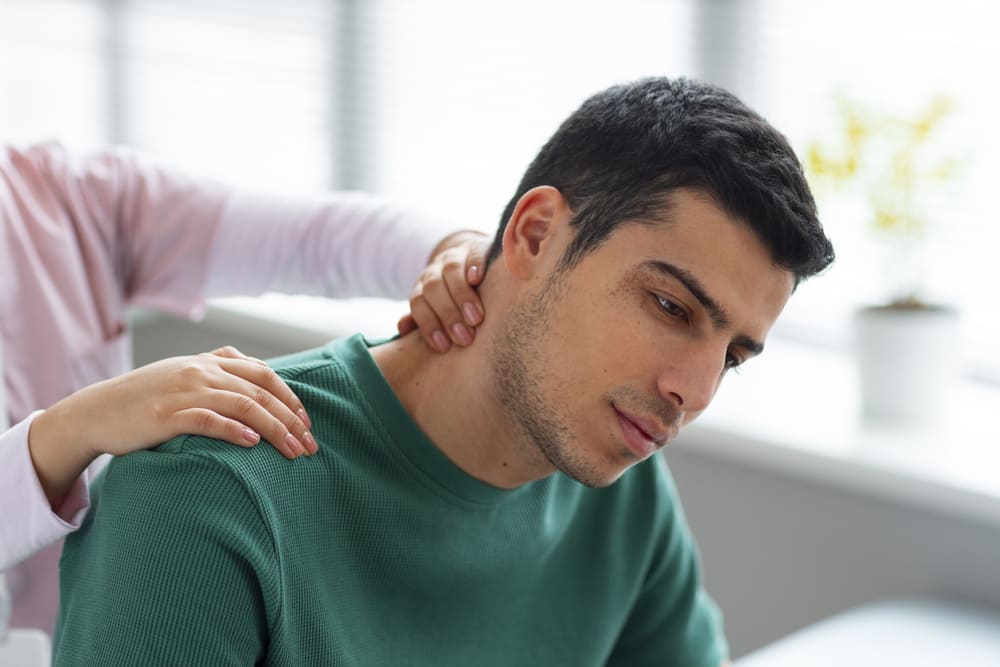
When the source of neck pain is partly rooted in fascial adhesions, scar tissue, or chronic muscle dysfunction, soft tissue therapy becomes an essential part of the plan.
Massage can ease neck pain from surface muscle tension in the short term. But it doesn't reach the deeper mechanical issues causing pain in the fascia or joints following an injury. For mechanical neck pain with a soft tissue component, a more specific approach is needed.
Graston Technique uses instrument-assisted tools to address adhesions and restricted tissue in the neck muscles and surrounding fascia. For neck pain caused by old accidents, repetitive strain, or untreated neck strains, Graston targets specific damaged tissue. Dr. Bracic holds a Level 3 Graston certification, allowing for more precise application than standard training provides.
Pain is commonly concentrated in the neck and upper back in these cases. Shoulder pain connected to cervical injury often improves when the soft tissue component is addressed directly. Acoustic shockwave therapy may also help relieve pain in stubborn connective tissue and tendon conditions that haven't responded to other care.
People with neck pain who've tried physical therapy elsewhere without addressing soft tissue adhesions often benefit from adding Graston or shockwave to their treatment plan. Combining manual techniques with technology-assisted soft tissue treatment is a standard approach in physical medicine and rehabilitation for chronic musculoskeletal conditions.
At Novaré Injury Care and Rehab, we match the technique to what the exam and imaging reveal. The same approach doesn't work for every patient, and we don't apply it that way.
Option 5: Rehabilitative Exercise and Functional Restoration
Reducing pain in the office is one part of the process. Keeping it away is another.
People with chronic neck pain often find that pain and stiffness return within days or weeks of treatment. That cycle often means the muscles supporting the cervical spine haven't been rebuilt. Care without rehabilitation tends to produce only temporary results.
Custom exercise builds strength in the neck muscles, upper back, and core. Better muscular support means less load on the discs and joints, which can reduce pain and lower the risk of recurrence. For patients experiencing pain repeatedly, rehabilitation is often the missing layer in care that focused only on pain reduction.
At Novaré Injury Care and Rehab, rehabilitation is built around each patient's diagnosis and daily demands. Patients returning to physically demanding work need a different plan than those returning to sedentary routines. For the working-class communities we serve in Lehigh Acres, that distinction matters.
We also use EMSCULPT NEO, an FDA-cleared technology for muscle conditioning and rehabilitation, to support muscle recovery in patients dealing with post-injury weakness. For patients also dealing with low back pain alongside their cervical symptoms, treatment can address low back and neck function together when the plan supports it.
The goal is that you can move your neck freely, sleep on your back comfortably, and get back to normal activity. Relieve neck pain and improve functional strength together, and the results are more likely to last. Pain in adults that keeps returning after incomplete rehabilitation is common. It doesn't have to stay that way.
When care starts with an accurate diagnosis and builds through each layer of the problem, the outcome isn't just less pain. It's restored function. That's the difference between treating a symptom and treating the injury.
How to Know Which Treatment Is Right for You
There is no single treatment plan that works for everyone dealing with chronic neck pain. The right neck pain treatment starts with understanding what's actually causing the problem.
Neck pain typically resists improvement until the structural source is identified. Pain may seem manageable at first. But severe pain, radiating symptoms, or neck pain and improve attempts that keep failing are signs that something needs proper evaluation. Neck pain is often underestimated early. That delay can make it harder to get ahead of the underlying problem.
At Novaré Injury Care and Rehab, your first visit includes a comprehensive clinical evaluation, digital X-ray, and a report of findings where Dr. Bracic walks through what he sees. You leave with your X-ray images on a flash drive. The visit includes up to two therapy services and typically runs 60 to 90 minutes. The cost is $200.
If you already have an MRI, Dr. Bracic reviews it in advance and prepares a marked-up analysis before your appointment. If you don't have one yet, he'll assess whether imaging is needed based on the exam and X-ray.
For patients experiencing pain following an auto accident in Florida, Novaré Injury Care and Rehab has the medical oversight in place to provide EMC evaluations on-site. This is important for any Florida patient who needs access to the full $10,000 in PIP benefits. No separate visit required.
We document everything. For patients with active injury cases, that thoroughness matters at every stage.
Nonsurgical treatments chosen based on an accurate diagnosis can produce lasting results for people with neck pain. But the starting point has to be finding out what's actually there.
Our bilingual team in English and Spanish serves Fort Myers, Lehigh Acres, Cape Coral, and the surrounding area. Schedule your first visit at Novaré Injury Care and Rehab. We'll identify the source of your pain and build a care plan around what your situation actually requires.
FAQs About Chronic Neck Pain Treatment
Q: What are the most effective nonsurgical treatments for neck pain?
A: Nonsurgical treatments for neck pain include physical therapy, which helps strengthen neck muscles and improve flexibility, along with pain medications such as NSAIDs or muscle relaxants. Other effective options include targeted injections, massage therapy, and acupuncture. Your health care provider can recommend the best combination based on what's causing neck pain in your specific case.
Q: How can physical therapy help with chronic neck pain treatment?
A: Physical therapy is one of the most effective treatments for neck pain because it addresses the root causes of pain rather than just masking symptoms. A physical therapist will design exercises to strengthen weak neck muscles, improve posture, and increase range of motion. Therapy for chronic neck pain typically includes manual therapy techniques, stretching exercises, and education on proper body mechanics to prevent future injuries.
Q: What home remedies can help manage chronic neck pain?
A: Several home remedies can provide relief when living with chronic neck pain. Applying ice packs during the first 48 hours can reduce inflammation, while heat therapy afterward helps relax tense neck muscles. Gentle stretching exercises, maintaining proper posture, using a supportive pillow, and taking over-the-counter pain medicine can all help manage chronic neck pain. However, if pain can be a sign of a more serious condition, consult your health care provider.
Q: What are the common causes of neck pain that require professional treatment?
A: The causes of neck pain vary widely, from muscle strain and poor posture to more serious conditions like herniated discs, arthritis, or spinal stenosis. Whiplash injuries, pinched nerves, and degenerative disc disease are also common culprits causing neck pain. A health care provider can perform proper diagnostic tests to identify the specific type of neck pain you're experiencing and develop an appropriate pain treatment plan.
Q: When should I consider pain medications for neck pain treatment?
A: Pain medications should be considered when conservative home remedies aren't providing adequate relief or when chronic pain significantly impacts your daily activities. Your health care provider may recommend over-the-counter options like acetaminophen or ibuprofen, or prescribe stronger pain medicine for severe cases. Pain medications work by blocking pain signals to the brain, but they should be used as part of a comprehensive pain management strategy that includes other treatments for neck pain.
Q: How does pain management differ from regular pain treatment?
A: Pain management is a comprehensive, multidisciplinary approach to treating chronic pain that goes beyond simple medication. While basic pain treatment might focus on immediate symptom relief, pain management combines various strategies, including physical therapy, psychological support, lifestyle modifications, and medication, to address both the physical and emotional aspects of living with chronic neck pain. This holistic approach helps patients manage chronic neck pain more effectively over the long term.
Q: What type of neck pain requires immediate medical attention?
A: Certain types of neck pain require urgent evaluation by a health care provider. Seek immediate care if you experience neck pain without any known injury but accompanied by fever, severe headache, or numbness spreading to your arms or legs, as pain can be a sign of serious conditions like meningitis or spinal cord compression. Also, neck pain following trauma, or pain accompanied by loss of bladder control or severe weakness, warrants emergency treatment.
Q: Can I experience neck pain without having any obvious injury?
A: Yes, you can definitely experience neck pain without any obvious injury or trauma. Common causes include poor posture from prolonged computer use, sleeping in an awkward position, stress-related muscle tension, or gradual wear and tear from aging. Degenerative changes in the spine can develop slowly over time, causing neck pain without a specific triggering event. If you're experiencing persistent neck pain without a clear cause, consult your health care provider to identify the underlying causes of pain and develop an appropriate treatment plan.