Chiropractic Care and Adjustments
in Fort Myers and Lehigh Acres
Back pain, neck pain, sciatica, and headaches don't have to run your life. Novaré Injury Care and Rehab provides chiropractic care backed by digital imaging, medical oversight and Dr. Ivan Bracic's 30+ years of clinical experience, at clinics in Fort Myers and Lehigh Acres.
Chiropractic care and adjustments at Novaré Injury Care and Rehab in Fort Myers and Lehigh Acres, FL, under the direction of Dr. Ivan Bracic, DC.

When Should You See a Chiropractor for Back or Neck Pain?
If your pain lasts more than a few days, keeps coming back, or limits what you can do, it's worth getting evaluated. Many people wait weeks or months hoping it will go away on its own. Sometimes it does. But when it doesn't, the problem often gets worse.
Here are the signs that chiropractic care may help:
- Pain that radiates into your arms or legs
- Stiffness in your neck or lower back that won't loosen up
- Headaches that start at the base of your skull
- Numbness or tingling in your hands or feet
- Pain that gets worse when sitting, standing, or driving for long periods
- Muscle spasms that keep returning
- Limited range of motion in your spine or joints
At Novaré, your first visit starts with digital x-rays and a thorough exam by the doctor. We don't adjust without imaging first.
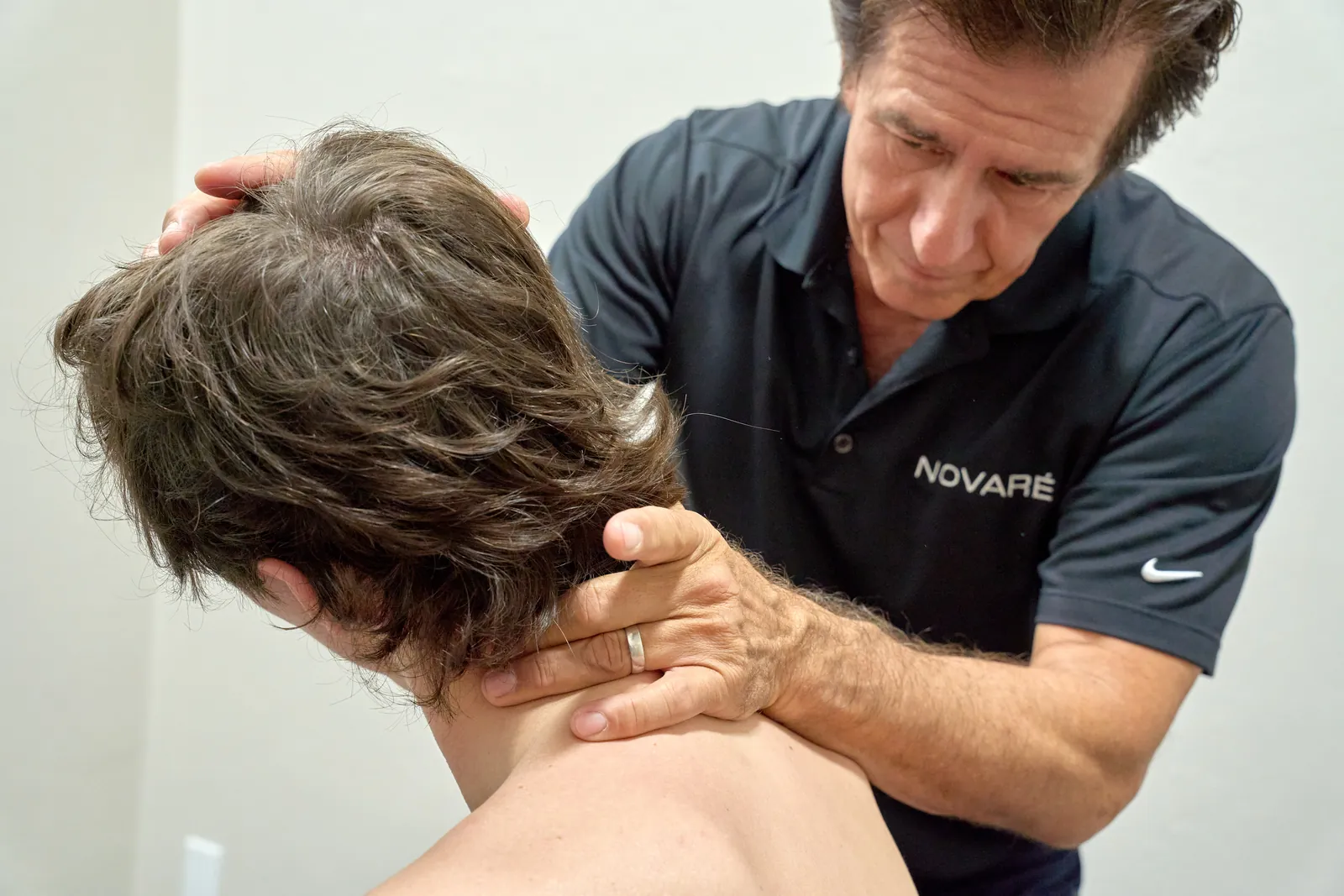
Chiropractic Adjustments, Backed by Imaging and Medical Oversight.
Most chiropractic visits last five to ten minutes. You get adjusted and you leave. That works for some people. But if your pain keeps coming back, or if you have an injury that's more complex than a simple misalignment, that approach falls short.
Novaré is a licensed Medical Corporation with a chiropractic foundation. What that means for you:
We Image Before We Adjust
Every new patient gets digital x-rays on the first visit. When disc involvement is suspected, we coordinate MRI imaging and Dr. Ivan Bracic reads the results himself. He has post-graduate training in MRI interpretation. Your care is based on what we see, not what we guess.
More Than One Tool
We use $25,000 flexion-distraction spinal tables for Cox Flexion Distraction technique. Most chiropractic offices use $1,000 tables. We also offer the Pro Adjuster SRT for patients who prefer instrument-assisted adjustments without manual cracking. And when adjustments alone aren't enough, we combine them with Class IV laser therapy, shockwave therapy, or rehabilitative exercises.
Medical Oversight
Dr. Javier Sosa, our Medical Director, provides physician oversight for complex cases. This means we can coordinate with our neurosurgery referral network, provide EMC determinations for PIP coverage, and build recovery plans that go beyond what a standalone chiropractic office can offer.
Licensed Medical Corporation
Novaré is a licensed Medical Corporation, not a chiropractic-only office. That changes what we can diagnose, treat, and coordinate under one roof.
Conditions We Treat
Chiropractic adjustments address a wide range of musculoskeletal conditions. Here's what we treat most often at our Fort Myers and Lehigh Acres clinics.
Chronic Low Back Pain
From sitting, lifting, or degenerative changes
Neck Pain & Stiffness
From posture, stress, or injury
Sciatica
From disc herniations or nerve compression
Headaches & Migraines
Originating from cervical spine tension
Herniated or Bulging Discs
Causing radiating pain down the arms or legs
Whiplash Injuries
From auto accidents
Shoulder Pain
From rotator cuff issues or referred spinal problems
TMJ Disorders
Causing jaw pain and clicking
Carpal Tunnel Syndrome
Related to nerve compression
Sports Injuries
Affecting the spine, joints, or soft tissue
Arthritis Pain
In the spine and peripheral joints
Pregnancy Discomfort
Lower back and pelvis pain during pregnancy
We treat people of all ages. And if chiropractic alone isn't the right fit, we have manual therapy, laser treatment, shockwave therapy, and spinal decompression under the same roof.
Chiropractic Techniques at Novaré
Three distinct approaches, selected based on your diagnosis and comfort level.
Cox Flexion Distraction
A gentle, non-surgical technique performed on a specially designed table that provides controlled stretching and decompression of the spine. It increases spinal mobility, reduces pressure on discs and nerves, and treats herniated discs, sciatica, and spinal stenosis. The table adjusts to accommodate patients experiencing pain, ensuring a comfortable treatment experience. Most plans involve multiple sessions for best results.
Pro Adjuster SRT
An instrument-based chiropractic tool that uses repetitive pulsing at specific frequencies instead of manual cracking. The pulsing gradually increases in intensity, stimulating mechanical receptors in joints and muscles to promote healing and relaxation. Good for patients who prefer a gentler approach or who are uncomfortable with traditional manual adjustments.
Manual Spinal Adjustments
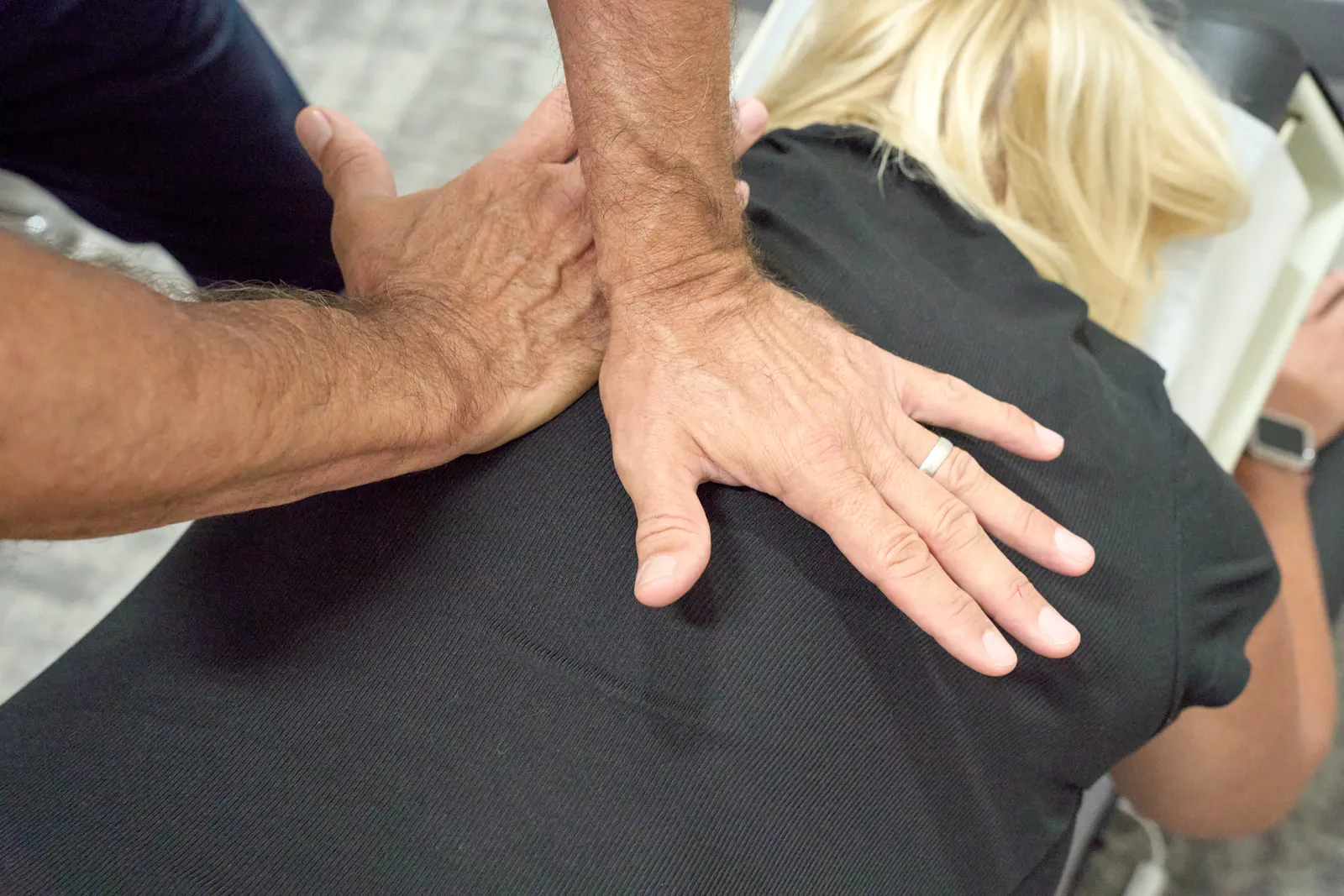
Traditional hands-on adjustments to restore alignment, reduce nerve pressure, and improve joint mobility. Dr. Bracic has performed spinal adjustments for over 30 years and adapts his technique to each patient's condition, age, and comfort level.
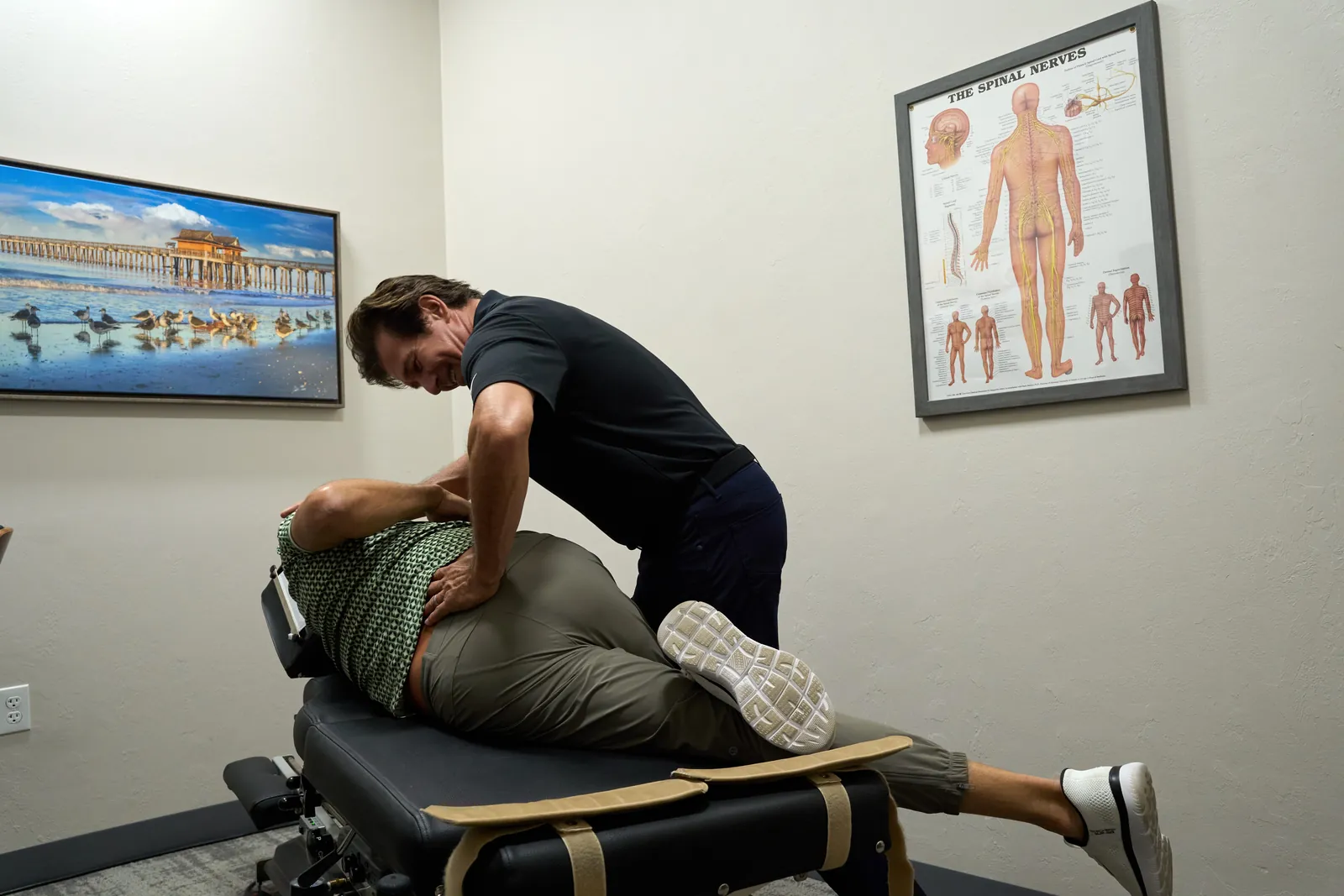
See Chiropractic Care at Novaré
An adjustment without the crack, and why Dr. Ivan Bracic never adjusts a neck before a proper exam.
What Our Patients Say
Over 30,000 patients treated across 30 years of practice. Here's what some of them say about chiropractic care at Novaré.
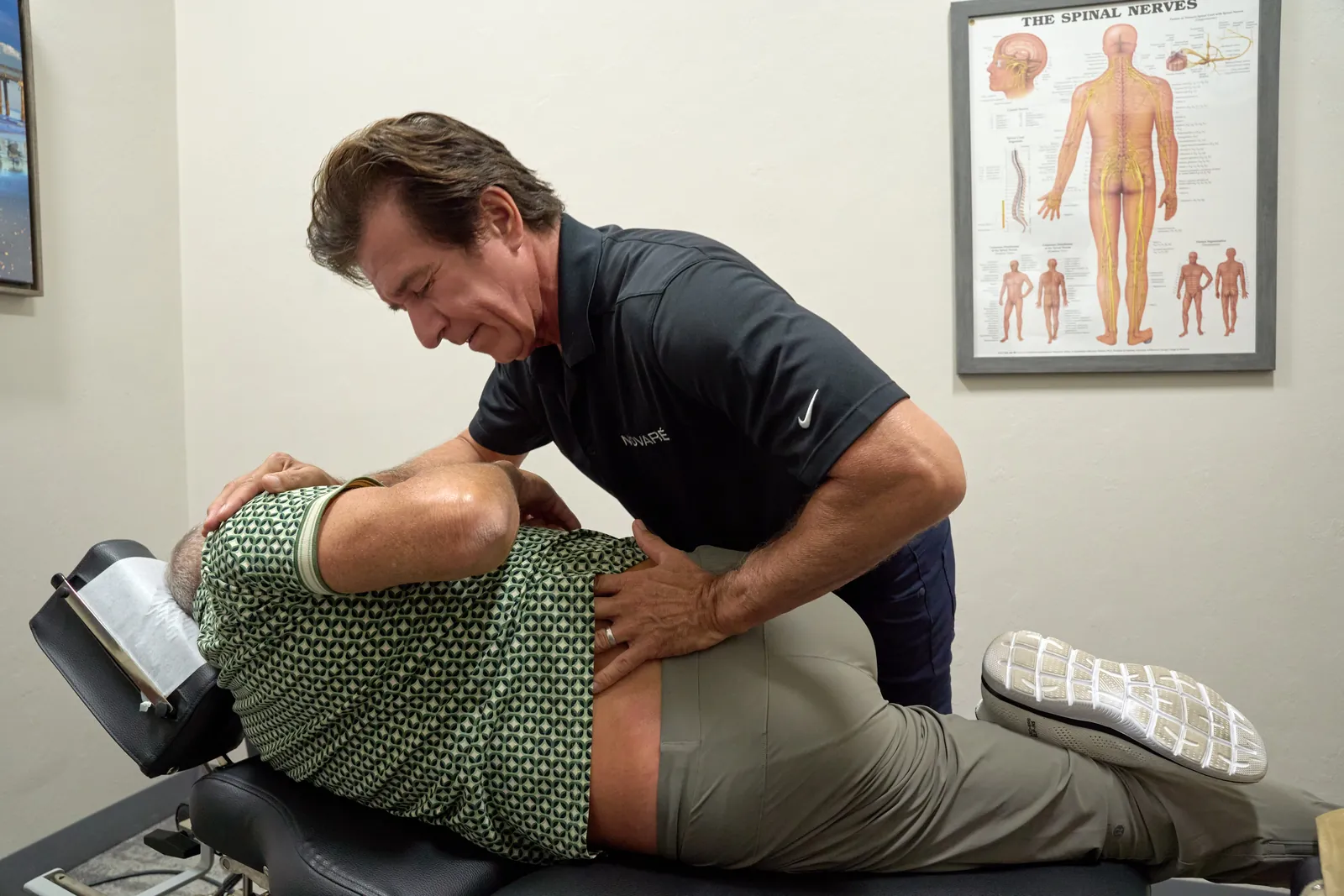
Trusted by 30,000+ patients over 30 years of experience.
“Dr. Ivan & his staff are hands down the best chiropractic services ever!!! His care, attention, knowledge, concern & wisdom for his patients can't be beat.”
“Dr. Ivan discovered that a butt muscle was in spasm and strangling my sciatic nerve. He put me on his Tesla coil machines for a couple sessions and my pain went away.”

“My sciatic nerve was really bothering me with this pregnancy. Dr. Ivan was able to get me in the same day... I feel brand new!”
“I have suffered with scoliosis and a multitude of bulging discs in my spine for years now due to many car accidents... I have made more healing progress in the past five months than I did in the past few years thanks to them.”
“Because of your testings and how you practice chiropractic, you were able to find a life threatening illness... You saved my life.”
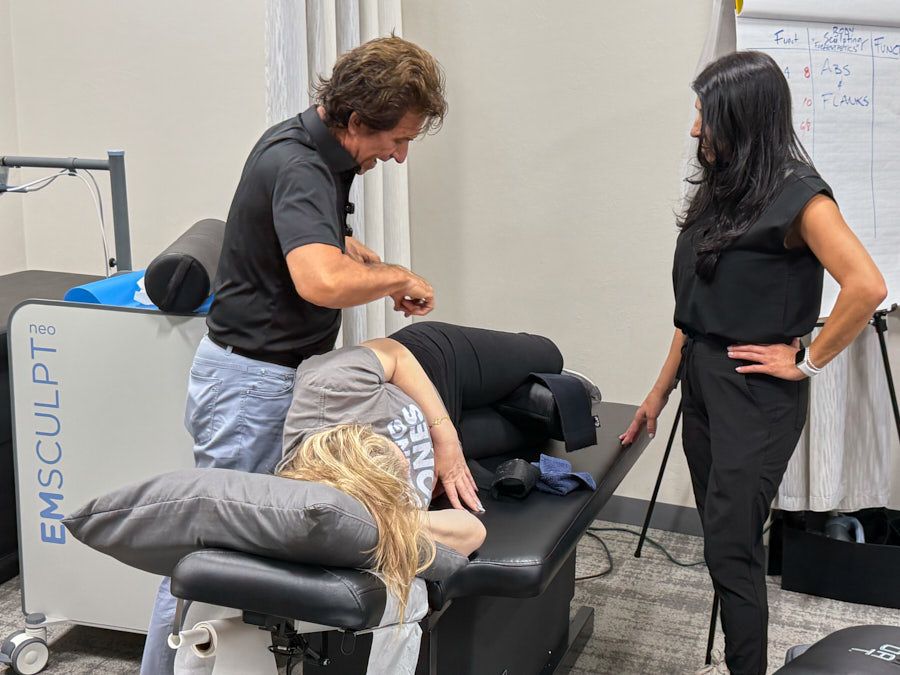
Your First Chiropractic Visit
$200 | 60 to 90 minutes with the doctor.
- Physical exam and evaluation by Dr. Bracic
- Digital x-rays taken on-site
- A report of findings where the doctor explains exactly what he sees
- Your x-ray images on a flash drive to take home
- Up to 2 therapy services to begin addressing your pain that day
If your x-rays suggest disc involvement, Dr. Bracic will coordinate MRI imaging and personally read the results before designing your treatment plan. He has specialized post-graduate training in MRI interpretation, which means you get a diagnosis based on imaging, not guesswork.
For People Who Cannot Afford to Stay Sidelined
You have a job. A family. Responsibilities that don't pause because your back hurts. Our patients aren't looking for someone to tell them to rest and take ibuprofen. They're looking for a provider who will figure out what's wrong and build a plan to address it so they can get back to the life that depends on them.
If that sounds like you, this is the right place.
Your Best Self Is Calling
Book a visit and Dr. Bracic will look for the cause with an exam and digital x-ray on your first appointment.
Dr. Ivan Bracic and our team take a whole-person approach to healing. Chiropractic care combined with medical oversight, imaging, and therapeutic technology. 30+ years. 30,000+ patients. Fort Myers, Lehigh Acres, Cape Coral, Estero, and all of Lee County. Our team speaks English and Spanish.
Chiropractic Questions Answered
Get clear answers about chiropractic care, your first visit, and what to expect at Novaré.
Two Convenient Locations Serving Southwest Florida
Chiropractic care close to home. Same-day or next-day appointments after an accident at both locations.
Fort Myers clinic, 15880 Summerlin Rd Suite 114 · Lehigh Acres clinic, 25 Homestead Rd N Suite 5 · All locations and hours
Lee County Service Area
Nuestro personal habla inglés y español.
Most Popular Treatments
Accident Care
Auto accident and sports injury treatment. Same-day appointments. Led by a trauma-certified chiropractic physician.
Spinal Decompression
Non-surgical disc treatment using the DRX9000 and AccuSpina. MRI required. Dr. Bracic reads every image.
Knee Decompression
Knee-On-Trac for meniscus tears, arthritis, ligament injuries. No injections.
Class IV Laser Therapy
AI-guided Class IV laser therapy and inflammation. First in Florida for next-gen AI laser research.
Shockwave Therapy
Acoustic wave treatment for chronic soft tissue pain.
Manual Therapy
Myofascial release, joint mobilization, soft tissue work.
Diagnostic Imaging
Digital x-rays with MRI coordination and in-house interpretation.